 On-Demand
Next Gen Automotive Lighting: Emerging trends
Automotive lighting is evolving into an intelligent technology that enhances safety, enables vehicle communication, and delivers personalized user ex…
View Details

Ansys Optics provides a comprehensive suite of simulation tools for designing, optimizing, and verifying optical systems. These tools are supported by world-class customer service and enable designers to accelerate the development of advanced optical products. With a range of high-fidelity physics solvers, Ansys Optics offers intuitive workflows for precise design across different scales, from nano to macro. This allows for the creation of diverse optical applications with improved performance, reliability, and yield.
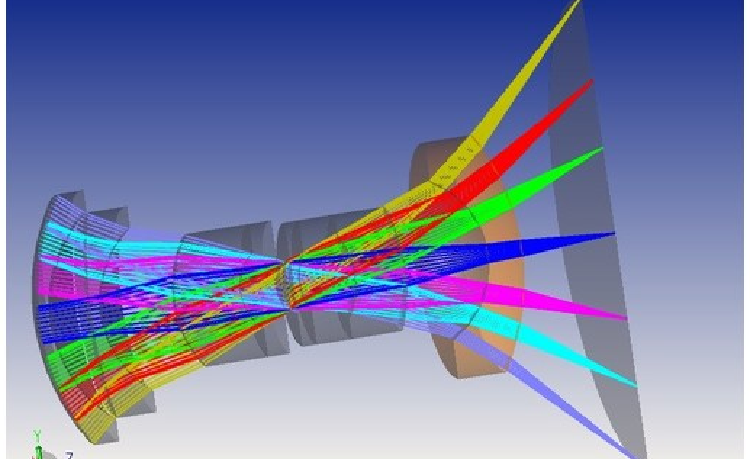
This tool conducts fully coupled quantum mechanical band structure calculations using the k.p method, ensuring accurate analysis of semiconductor materials. Integrated with INTERCONNECT, it facilitates the creation of advanced laser models, incorporating tuning and external feedback effects for comprehensive simulations. Its material library encompasses common III-V semiconductors, and it automatically generates models for fractional semiconductor alloys, streamlining the design process for semiconductor devices.
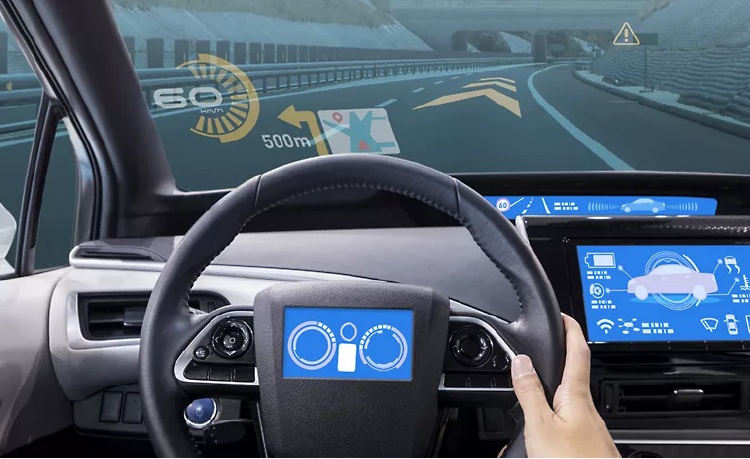
Ansys SPEOS is a powerful software suite designed for the design and validation of optical systems. It offers a scripting interface that allows users to replicate actions from the user interface, such as source creation and simulation result analysis, which can automate repetitive tasks. Speos also features direct modeling capabilities, enabling quick geometry definition without the complexity of traditional CAD software, making it accessible for non-CAD experts
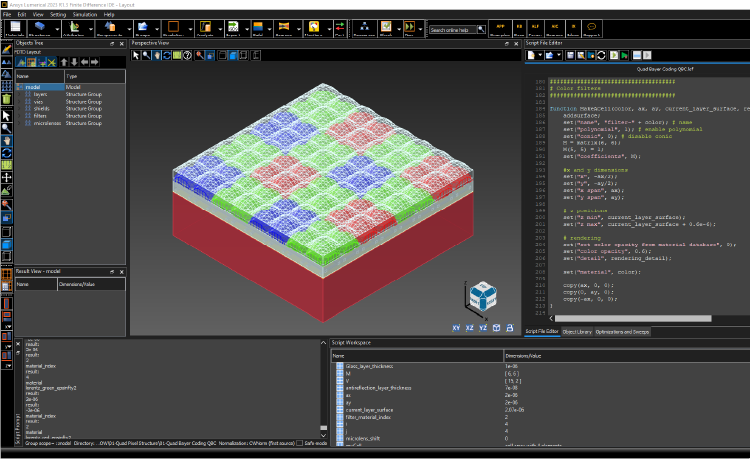
Our platform excels in simulating opto-electronic devices, processes, and materials at the nano-scale. By solving Maxwell's equations in the time domain, we offer a robust solution across a broad spectrum region, ensuring reliability and accuracy. It's great for designing all sort of optoelectronic active and passive and materials. Plus, it gives accurate results across different light wavelengths. Also, it comes with tools that make it easier to write scripting, analyze results, and make designs better.
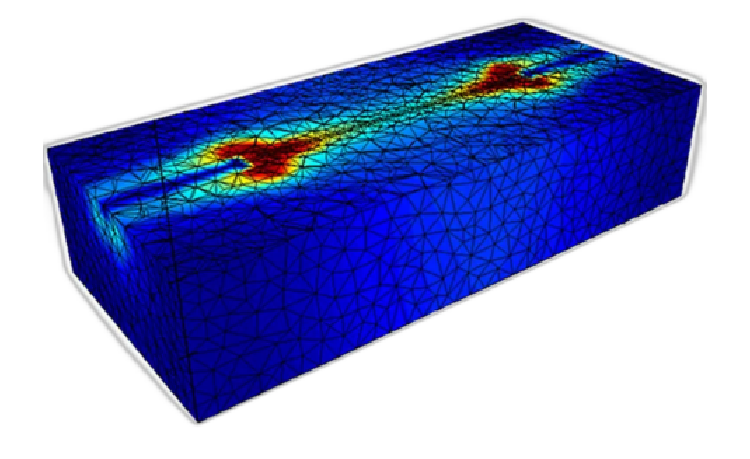
Ansys Mode is a powerful simulation tool that tackles the complexities of photonics with precision and efficiency. By solving Maxwell's equations in the single frequency domain, it offers a comprehensive understanding of light behavior within waveguides and couplers. Its robust capabilities extend to accommodating large planar structures and lengthy propagation paths, ensuring accurate analysis across diverse scenarios. With bi-directional propagation, Mode accurately simulates guided light movement, capturing multiple reflections along the propagation direction for thorough insight.
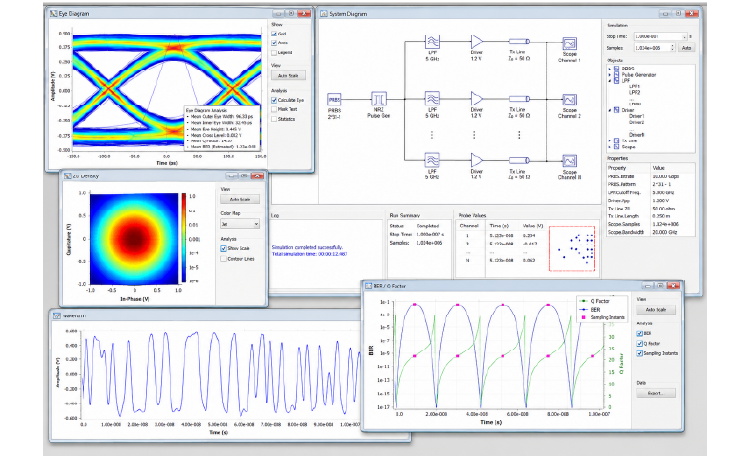
Interconnect offers a user-friendly interface with a vast library of basic and foundry-specific elements for schematic design. Users can incorporate measured data and component-level simulations to create and update calibrated Compact Model Libraries effectively. Additionally, it supports the publication of foundry Process Design Kits (PDKs) and seamlessly integrates with other popular EDA and PDA tools. With statistical capabilities like Monte Carlo and corner analyses, it ensures comprehensive design validation and optimization
Created for design engineering workflows, our intuitive product design software generates a fast user experience. Rapid design exploration includes detailed insight into real-world product performance. Live physics and accurate high-fidelity simulation combine into an easy-to-use interface that supports faster-time-to-market.Leverage interoperable solvers for multiphysics design of various components such as image sensors, mLEDs, photodetectors, modulators, and plasmonics.

QuantumATK enables atomistic-level materials modeling and simulation, helping researchers accelerate the development of next-generation materials and semiconductor technologies. By providing deep insights into material behaviour and structure-property relationships, it reduces reliance on physical experimentation and speeds up R&D.
Ensures precise material modeling across extensive wavelength ranges.
Facilitates in-depth analysis and visualization of simulation results.
Seamlessly integrates with Lumerical scripting language, MATLAB API, and Python via Automation API for enhanced customization and automation.
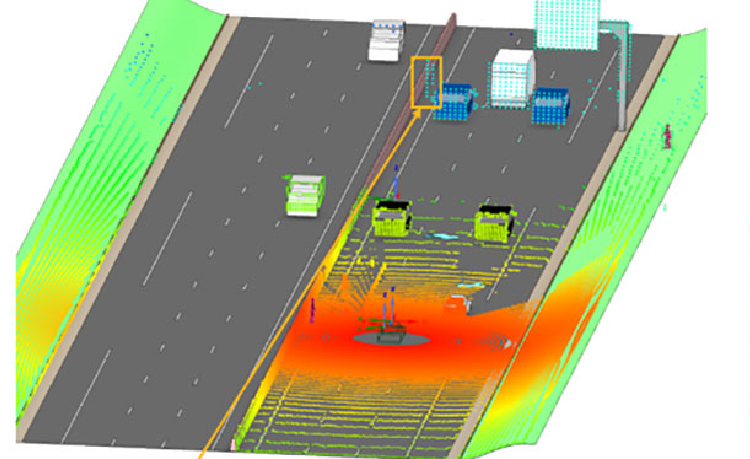
Presenting SPEOS as an advanced optical simulation tool designed specifically for camera and Lidar validation in real time. Its accuracy comes from precise ray tracing in which the light interacts with the optical components that helps the users to predict and improve the performance of the sensors.
Speos is an expert in simulating and optimizing optical systems involving virtual reality (VR), augmented reality (AR), head up displays (HUD) and human vision factors. Speos guarantees that HUD interfaces in automotive, aviation and consumer electronic industries by adapting human vision capabilities such as eye movement, viewing angles and polarization. Integrating AR and VR in SPEOS enables prototyping, testing, and ensuring optimal user experience for gaming, training, education and more.
The smooth integration of SPEOS with computer aided engineering (CAE) tools enables a full optical system design methodology. Through this integration, engineers can assess system performance by combining structural, thermal, and electromagnetic evaluations with optical simulations. This also opens the door to optimizing designs for real world applications, ensuring robustness, durability and efficiency across industries.
On-DemandAutomotive lighting is evolving into an intelligent technology that enhances safety, enables vehicle communication, and delivers personalized user ex…
View Details Article
Explore waveguide coupler principles, design, coupling length, and simulation using Ansys Lumerical MODE for integrated photonics.
Read Article Blog
How Ansys SPEOS and Zemax OpticStudio power end-to-end virtual validation of logo projection systems — optimizing brightness, sharpness and real-worl…
Read Article Blog
Coma aberration produces comet-shaped blur in off-axis imaging systems. Learn how Zemax OpticStudio's spot diagrams, ray fan plots, and Zernike wavef…
Read Article Blog
Ambient lighting has evolved into a signature element of modern automotive interiors. Ansys Speos enables virtual evaluation of lighting concepts dur…
Read Article Article
Modern vehicles are undergoing a revolution in safety, comfort, and autonomy—all powered by advancements in optical engineering. See how Ansys SPEOS…
Read Article Blog
Headlamps have become a focal point of automotive design, but transparent plastic lenses bring a persistent challenge: condensation. See how Computat…
Read Article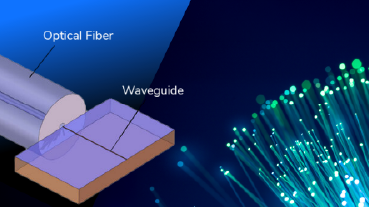 Blog
Edge couplers are vital components in photonic integrated circuits (PICs), facilitating efficient light transfer between optical fibers and on-chip w…
Read Article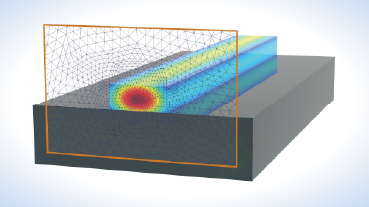 Blog
Explore the theory of optical waveguides and learn how to simulate them in Ansys Lumerical using the MODE eigenmode solver and the FDTD solver for be…
Read Article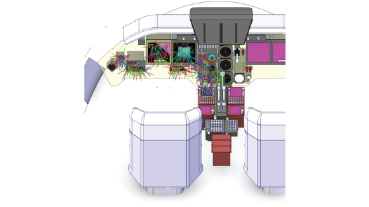 Blog
See how Ansys SPEOS simulates real-world cockpit lighting—day and night pilot vision, sun glare, windshield reflections and display raytracing—to imp…
Read Article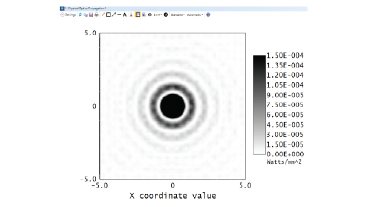 Blog
Compare classical Airy-pattern theory with Ansys Zemax Physical Optics Propagation for a 200 µm circular aperture — matching minima and maxima positi…
Read Article Case Study
MetaOptics is advancing metalens innovation through precision optical design and scalable manufacturing — using Ansys Lumerical and OpticStudio...
Read Case StudySimulate and optimize laser devices by analyzing optical gain, wavelength behavior, efficiency, and output performance. Enables faster development of semiconductor lasers for telecommunications, sensing, and photonics applications.
Design and evaluate optical modulators that convert electrical signals into optical signals. Helps improve modulation efficiency, bandwidth, insertion loss, and overall communication system performance.
Model photodetectors and optical sensing devices to predict responsivity, quantum efficiency, and signal response. Supports the development of high-performance detection systems for imaging, communication, and sensing applications.
Analyze light propagation, confinement, and loss characteristics in optical waveguides. Enables the design of efficient photonic integrated circuits and optical communication components.
Investigate light-matter interactions at the nanoscale using plasmonic structures. Supports the development of ultra-compact optical devices, biosensors, and next-generation nanophotonic technologies.
Simulate optical absorption, carrier generation, and energy conversion processes in photovoltaic devices. Helps improve efficiency, optimize material selection, and accelerate solar cell innovation.
Ansys 3D Design is a suite of tools — including SpaceClaim and Discovery — that lets engineers create, modify, and simulate 3D geometry directly within the Ansys simulation environment, eliminating the need to switch between separate CAD and analysis packages.
Licensed users can download Ansys SpaceClaim and Discovery through the Ansys Customer Portal. Contact CADFEM APAC to obtain a licence or request a free trial for evaluation.
Download the installer from the Ansys Customer Portal, run the setup wizard, and enter your licence server details. Detailed system requirements and step-by-step guides are available in the Ansys Installation Guide included with the download.
Ansys offers free self-paced courses on Ansys Learning Hub, along with official documentation and video tutorials. CADFEM APAC also provides instructor-led training tailored to your industry and workflow.
Use File → Save As to export geometry in formats such as STEP, IGES, ACIS, Parasolid, STL, and more. SpaceClaim also supports direct export to downstream Ansys solvers via Workbench.
Ansys Discovery generates an automatic mesh in real time as you run simulations. For refined control, switch to Refine Mode where you can define mesh sizing, inflation layers, and element types before solving.
Whether you're solving complex engineering challenges, accelerating innovation, or exploring new possibilities with simulation and digital engineering, our team is ready to support you. Backed by deep technical expertise and industry experience, we work closely with organizations to transform ideas into reliable, high-performance solutions. Connect with us to discover how CADFEM can help drive your next breakthrough.
CONTACT US