 On-Demand
FKM inside Ansys
Metallic components are often subjected to complex loading conditions where demonstrating sufficient strength, durability, and fatigue life is critic…
View Details

Ansys is a powerful simulation platform. CADFEM Ansys Extensions, developed by CADFEM and a network of highly specialized technology partners, enhance its capabilities by addressing specific engineering requirements. These extensions provide targeted functionality for specialized applications, including automated validation and compliance with industry standards, guidelines, and certification requirements.
Integrated into mechanical GUI, which makes very easy to verify bolts according to VDI guidelines.
Full-surface strength verification according to FKM guidelines involves evaluating complex, user-defined solid components to ensure they meet established fatigue and static strength requirements. This method assesses all surface areas under various loading conditions, checking for compliance with FKM's fatigue criteria, such as stress endurance limits, material properties, and loading cycles. By applying FKM criteria, engineers ensure that components meet rigorous standards for safety and durability, especially in high-stress or cyclically loaded environments.
Use post-processing tools to analyze stress, strain, and displacement across the model. Visualization tools like vector plots, streamline plots, or color-coded contour plots help in understanding the flow of forces. Look for force distributions and paths through critical components and across joints or supports to ensure the forces follow expected pathways.
Coupling of reduced order models at system level with creation of model libraries and automatic generating procedures. Model simplification via Model Reduction inside Ansys is suitable for optimization strategies in component development as well as for integrating compact models into an overall system simulation in the fields of electronics, automotive or microsystems. Despite reduction, the examination parameters are retained, which means fast results can be achieved with regards to designs and system simulations.
On-DemandMetallic components are often subjected to complex loading conditions where demonstrating sufficient strength, durability, and fatigue life is critic…
View Details On-Demand
Bolted joints are among the most widely used machine elements, yet their verification becomes challenging when multiple bolts, complex geometries, pr…
View Details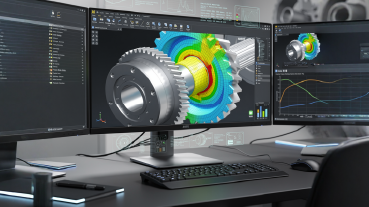 Article
Learn how to implement the Archard wear model in Ansys Mechanical using TB,WEAR APDL commands, configure contact elements, and extract wear depth res…
Read Article
Developed by CADFEM and partners and directly integrated into Ansys Workbench, the CADFEM Ansys Extensions selectively extend the functional range of Ansys. With Bolt Assessment inside Ansys you can evaluate all load cases and find critical loads in bolted joints. Calculation and verification is automated, fast and comfortable according to VDI 2230.

Fast strength evaluation with guideline-compliant verification according to the FKM standard. Full-surface strength verification of non-welded volume components according to FKM in compliance with guidelines. Strength verification of welds on shell and volume structures according to FKM in compliance with guidelines.

The intricate details needed to be considered for analyzing complex Finite Element Analysis (FEA) models is crucial for ensuring the precision representation of the components. To achieve effective dynamic and system level simulations, model reduction represents the leading approach. By utilizing model reduction within Ansys, it is possible to decrease the number of degrees of freedom, thereby making multiphysics system simulations more practical.

Rolling bearings are used in countless assemblies to support shafts. Often these are purchased parts, which for economic reasons can only be simulated in a very simplified way in the simulation process. With Rolling Bearing inside Ansys you can integrate high-precision bearings into your overall simulation within seconds - without expert knowledge.
A digital twin is a virtual replica of a physical asset, system, or process that is continuously updated with real-world operational data. It combines physics-based simulation with live sensor inputs to mirror the current state of its physical counterpart and support predictive decision-making.
Ansys Twin Builder is a multi-domain system simulation platform that enables engineers to create, validate, and deploy physics-based digital twins. It combines ROM technology, machine learning, and real-time IoT data integration to build operational twins that run in industrial deployment environments without requiring Ansys licences on the target hardware.
Digital twins continuously compare live sensor data against physics-model predictions to detect deviations that indicate degradation or developing faults. By tracking accumulated damage and remaining useful life in real time, they enable maintenance to be scheduled based on actual asset condition rather than fixed intervals — reducing both unplanned downtime and unnecessary servicing.
A reduced-order model compresses a high-fidelity simulation — such as an FEA or CFD model — into a compact mathematical representation that reproduces the same physics at a fraction of the computational cost. ROMs are essential for digital twin deployment because they allow rigorous physics to run in real time on edge or cloud hardware.
Ansys Twin Builder exports digital twins as portable runtime packages with standard REST API interfaces. These runtimes can be connected to industrial IoT platforms — such as AWS IoT, Azure Digital Twins, or PTC ThingWorx — to receive live sensor data streams and return updated state estimates, predictions, and recommendations through the same interface.
Digital twins deliver the greatest value in industries with complex, high-value, or safety-critical assets — including energy and utilities, aerospace and defence, automotive and EV, industrial machinery, and semiconductor manufacturing. Any sector where unplanned downtime is costly or where continuous performance optimisation drives competitive advantage can benefit from digital twin technology.
Whether you're solving complex engineering challenges, accelerating innovation, or exploring new possibilities with simulation and digital engineering, our team is ready to support you. Backed by deep technical expertise and industry experience, we work closely with organizations to transform ideas into reliable, high-performance solutions. Connect with us to discover how CADFEM can help drive your next breakthrough.
CONTACT US