What Is a Battery Management System? Guide for Automotive Applications
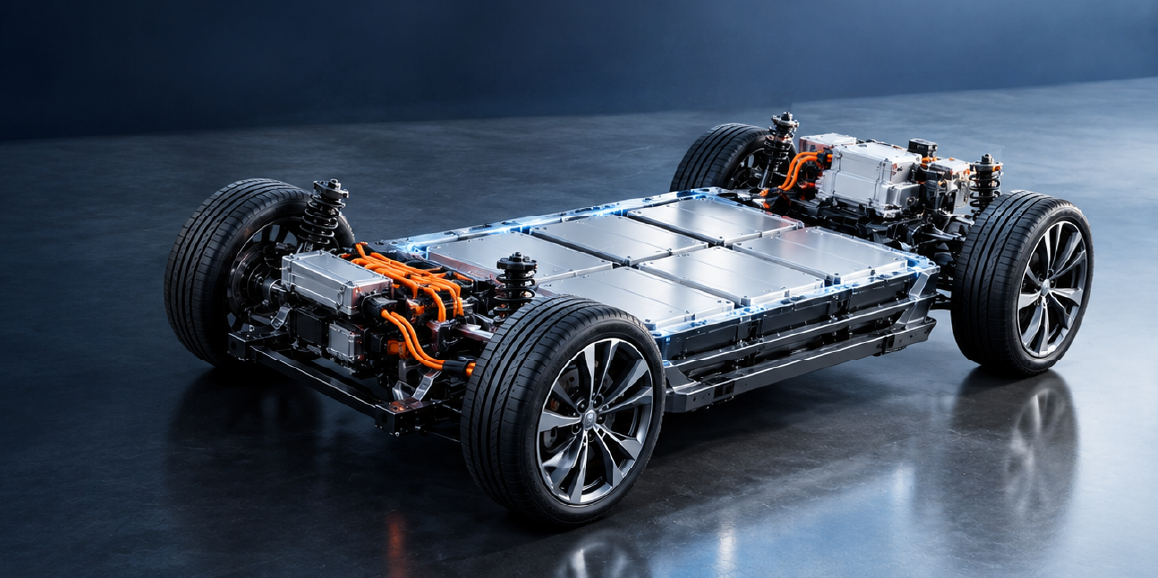
Read the CADFEM guide to smart BMS functions, automotive thermal management, centralized vs. modular architectures, and Ansys simulation
Read Article →
Static mixers are vital tools in engineering and fluid mechanics, allowing efficient mixing of fluids without the need for moving parts. By leveraging CFD simulations in Ansys Fluent, engineers can optimize static mixer designs, predict performance, and enhance industrial processes.
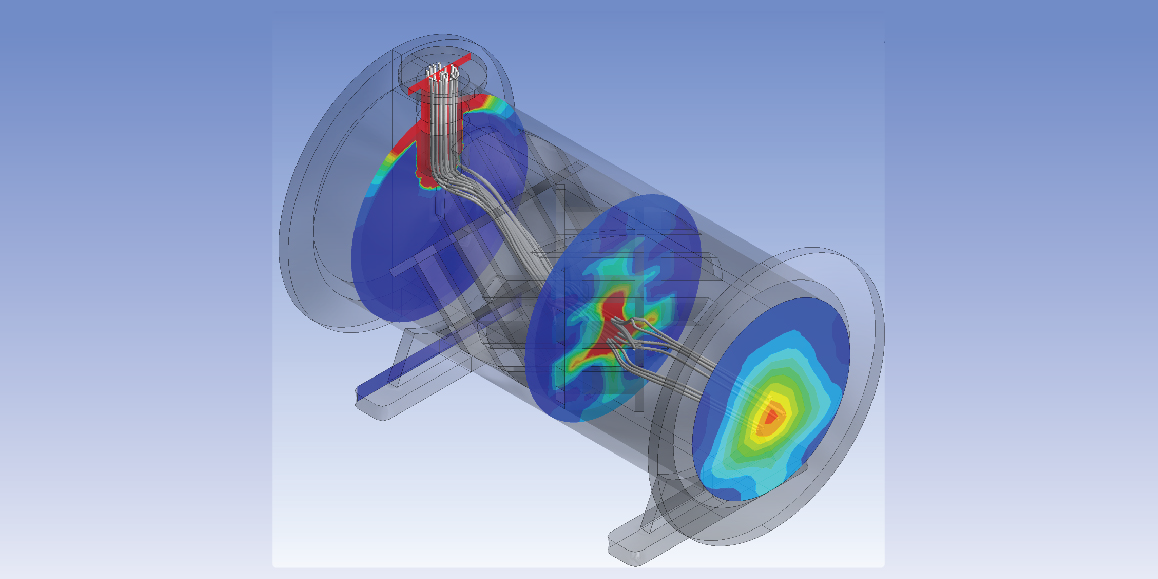
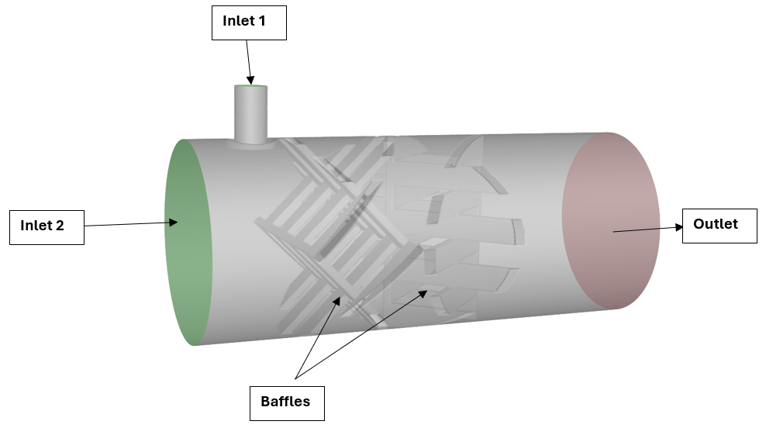
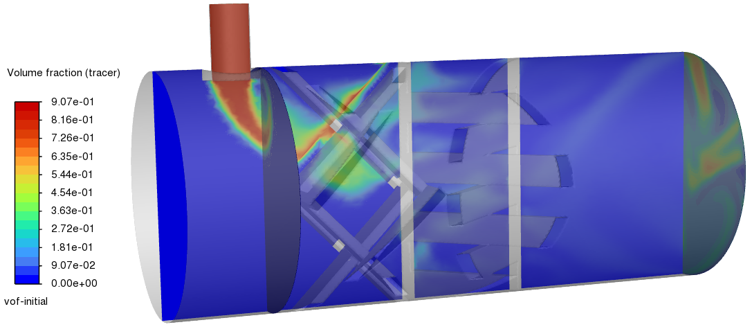
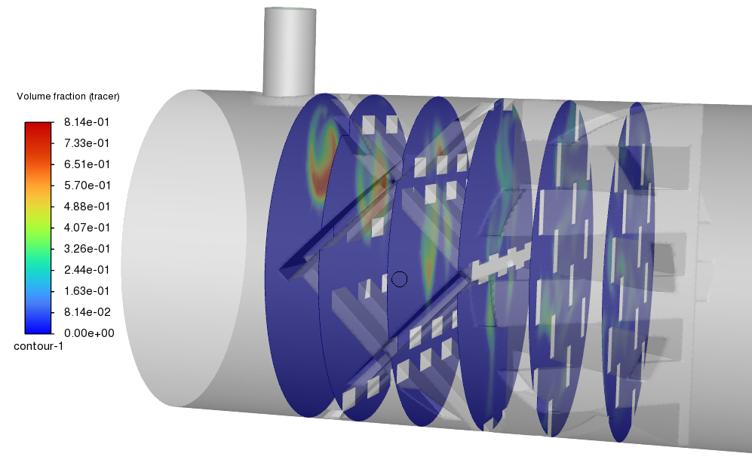
Static mixers are vital tools in engineering and fluid mechanics, allowing efficient mixing of fluids without the need for moving parts. By leveraging Computational Fluid Dynamics (CFD) simulations in Ansys Fluent, engineers can optimize static mixer designs, predict performance, and enhance industrial processes. This article delves into the role of Ansys Fluent in analyzing the mixing of two immiscible fluids in a static mixer and highlights its transformative impact on fluid mixing workflows.
Static mixers are devices inserted into pipelines to facilitate fluid mixing using the intricate geometry of their internal elements. As fluids flow through these mixers, turbulence is generated, promoting efficient mixing. These devices are widely used across industries such as:
Key benefits of static mixers include reduced energy consumption, improved product quality, and enhanced process control—all achieved without the need for moving parts, which minimizes maintenance requirements.
Ansys Fluent is a powerful CFD software that allows engineers to simulate and analyze fluid behavior within static mixers. By modeling complex mixing processes, Ansys Fluent offers invaluable insights that are difficult to achieve through traditional experimental methods. Key advantages of using Ansys Fluent for mixing analysis include:
Ansys Fluent enables the creation of detailed 3D models to visualize fluid interactions within the mixer. Engineers can identify:
Through Ansys Fluent simulations, engineers can test various static mixer designs virtually. By adjusting geometrical parameters, they can:
Simulating different operating conditions—such as flow rates, viscosities, and fluid properties—in Ansys Fluent ensures reliable performance predictions. This helps engineers design mixers that meet real-world requirements.
Traditional methods of evaluating fluid mixing rely on extensive physical testing, which can be both costly and time-consuming. Ansys Fluent significantly reduces the need for physical prototypes, streamlining the design and development process.
When dealing with immiscible fluids (liquids that do not mix), such as oil and water, CFD simulations using Ansys Fluent can provide crucial insights into:
Ansys Fluent can be applied to a wide range of static mixer design and optimization scenarios, including:
CFD simulations in Ansys Fluent allow engineers to analyze:
Static mixers often play a role in heat exchanger systems. Ansys Fluent evaluates:
Mass transfer phenomena such as absorption and desorption can be simulated in Ansys Fluent, providing insights into optimizing chemical reaction rates and improving process efficiency.
Static mixers are frequently integrated into reactor systems to enhance reaction efficiency. CFD simulations help ensure proper mixing and uniform reactant distribution.
Ansys Fluent assesses the impact of scaling up static mixer designs, ensuring that performance remains consistent across different operational scales. Engineers can also optimize process parameters to maximize efficiency.
Ansys Fluent revolutionizes the analysis and optimization of static mixers by providing detailed insights into fluid behavior and mixing efficiency. From simulating immiscible fluid mixing to optimizing heat transfer and mass transfer processes, Ansys Fluent empowers engineers to tackle complex challenges and achieve superior designs.
By incorporating CFD simulations into static mixer workflows, industries can reduce costs, save time, and enhance product quality—ultimately driving innovation and efficiency in engineering applications. If you’re ready to elevate your static mixer designs, Ansys Fluent is your ultimate tool for achieving exceptional results.
 Multi Physics
Read the CADFEM guide to smart BMS functions, automotive thermal management, centralized vs. modular architectures, and Ansys simulation
Read Article → Structures
Di tengah pesatnya perkembangan teknologi rekayasa, adopsi CAE di Indonesia menjadi kunci utama dalam meningkatkan efisiensi dan produktivitas berbagai sektor industri.
Read Article → Electronics
Learn how to use Ansys HFSS SBR+ for 77 GHz automotive radar simulation, evaluating radome effects, antenna performance, radiation patterns, and installation.
Read Article →Connect with CADFEM experts for advanced simulation, automation, and engineering solutions tailored to your industry.