A Deep Dive into Parachute Inflation and Float with LS-DYNA
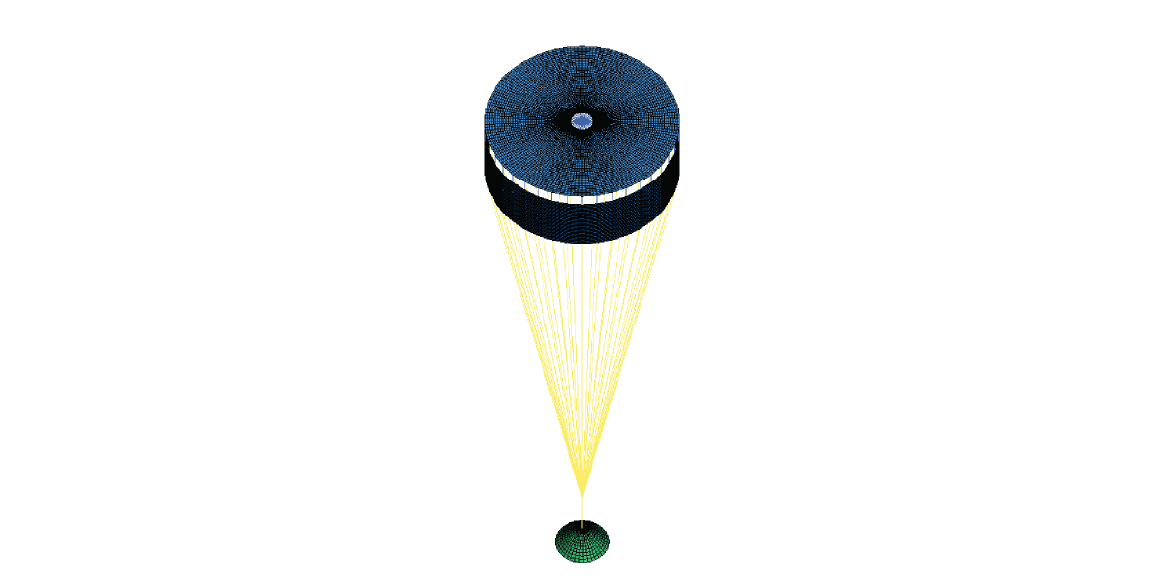
Parachutes are crucial aerodynamic decelerators in airdrop and planetary reentry missions, where their inflation dynamics involve significant fluid-structure interaction (FSI) phenomena.
SD
Suraj Dhomse
Senior Application Engineer, CADFEM INDIA
Jan 31, 20255 min read
Introduction
Parachutes are crucial aerodynamic decelerators in airdrop and planetary reentry missions, where their inflation dynamics involve significant fluid-structure interaction (FSI) phenomena. Given their low mass and high flexibility, parachutes experience complex interactions between the canopy structure and surrounding airflow. These interactions significantly influence structural deformation and performance under aerodynamic loads.
Traditional parachute deployment simulations rely on sequential processes—first simulating structural deformation using a solid mechanics solver and then analyzing aerodynamics separately with Computational Fluid Dynamics (CFD). However, this method often leads to inaccurate predictions. To overcome this, LS-DYNA’s robust FSI capabilities enable a more precise simulation of parachute deployment, offering crucial insights for aerospace and defense organizations.
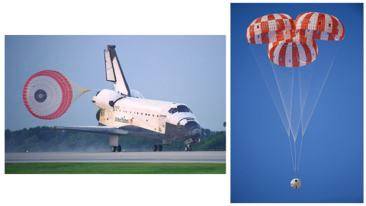
Figure 1 Fighter plane Decelerates Parachutes and Payload recovery Parachutes
Section 01Design of Drogue Parachutes
Drogue parachutes are deployed at high velocities ranging from 102 m/s at sea level to Mach 1.5 at 15,240 meters altitude. These parachutes are designed for:
Stability: Maintaining orientation within ±3 degrees.
Weight Efficiency: Optimized for minimal mass and volume.
Controlled Deceleration: Ensuring safe deployment of the main parachute.
LS-DYNA aids in structural integrity analysis, stress distribution, and inflation performance validation, making it indispensable in drogue parachute design.
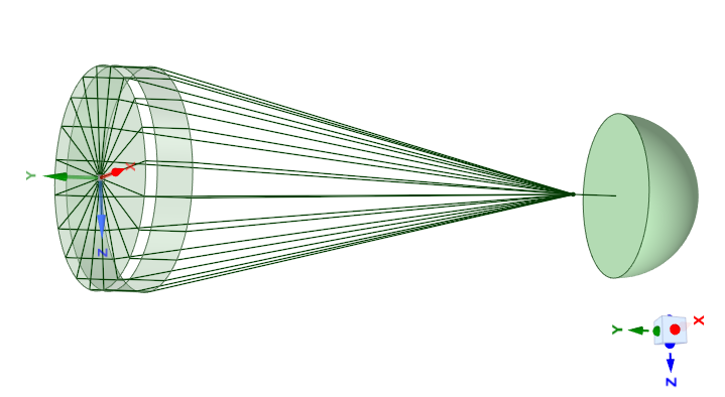
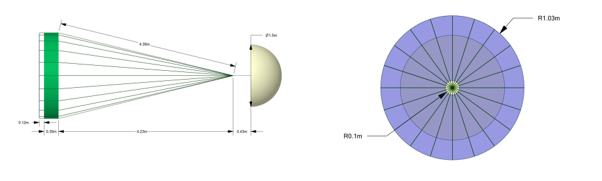
Figure 2 CAD of ParachuteFigure 3 Dimensions of Parachute
Section 02Structural Analysis Using LS-DYNA
Structural analysis is a key factor in parachute design and performance evaluation, as it determines how well the canopy and suspension lines withstand aerodynamic loads. LS-DYNA employs:
Shell Elements: The fabric canopy is modeled using fully integrated shell elements (Shell Type 16) that account for membrane, bending, and shear deformations.
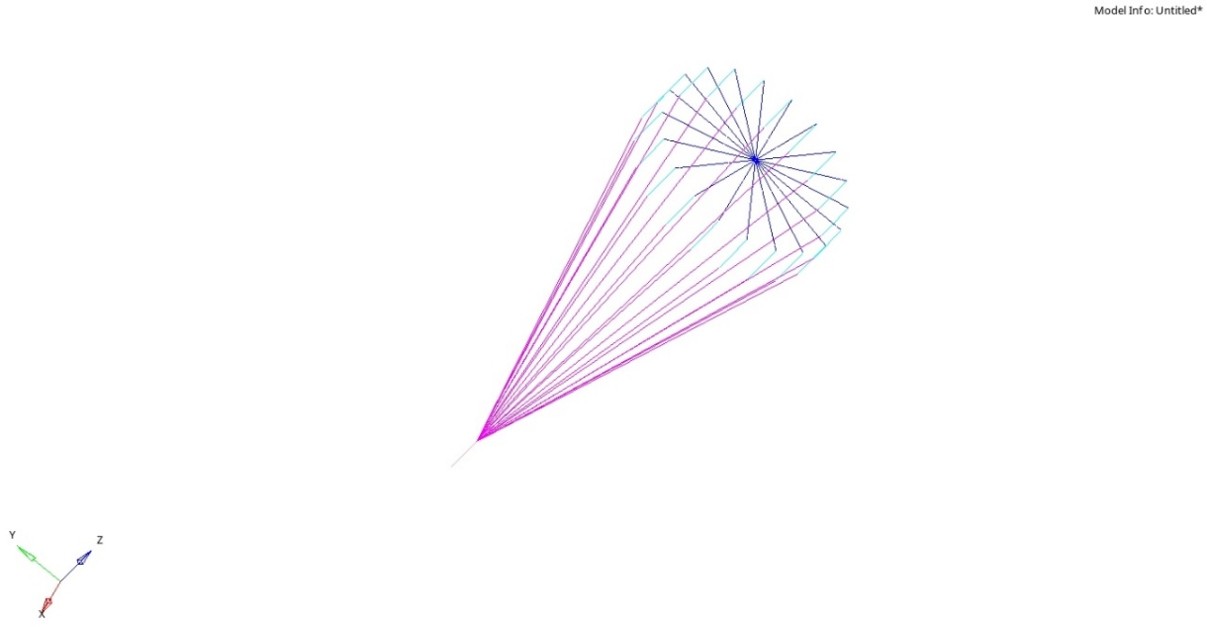
Discrete Beam Elements: Suspension lines and reinforcement cables are simulated using Type 6 discrete beams, incorporating MAT_CABLE_DISCRETE_BEAM material properties to model dynamic oscillations.
Dynamic Deployment Analysis: By employing Lagrangian dynamics, LS-DYNA accurately predicts canopy inflation, stress concentrations, and deformation behaviors.
Figure 4 Suspension Cables (Beams)
Section 03Material Modeling in LS-DYNA
Fabric materials in parachutes exhibit large deformations and nonlinear responses. LS-DYNA utilizes:
Layered Orthotropic Composite Material (MAT 22): This specialized model is used for fabrics experiencing wrinkling and compression failures.
Discrete Cable Material (MAT 71): Used for suspension lines to ensure tensile strength while avoiding compressive instability.
Porous Material Modeling (ICFD_MODEL_POROUS): Defines fabric permeability, crucial for accurately simulating air leakage through the canopy.
Section 04Results of Structural Analysis
Dynamic simulations in LS-DYNA evaluate parachute behavior under real-world conditions:
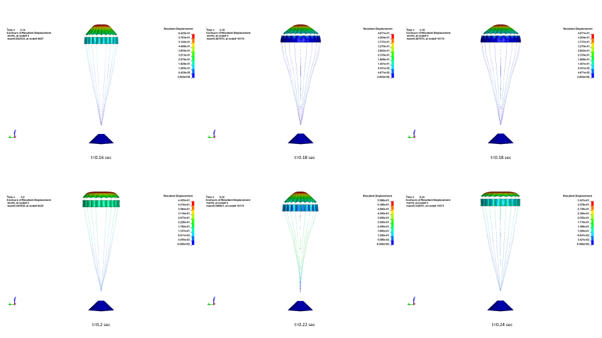
Maximum Displacement: 0.68 m for the parachute canopy.
Suspension Line Axial Force: 596.7 N.
Riser Axial Force: 9190.8 N.
These findings demonstrate LS-DYNA’s capability to predict stress distribution and deformation, ensuring safe and efficient parachute deployment.
Section 05Fluid Domain Modeling and Aerodynamic Analysis
CFD simulations using LS-DYNA provide valuable insights into parachute aerodynamics, addressing:
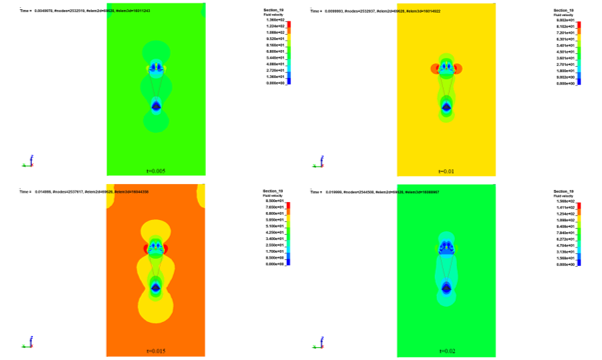
Wake Effects: Predicting asymmetric instabilities caused by bluff-body aerodynamics.
Recirculation Zones: Identifying turbulent regions that influence inflation stability.
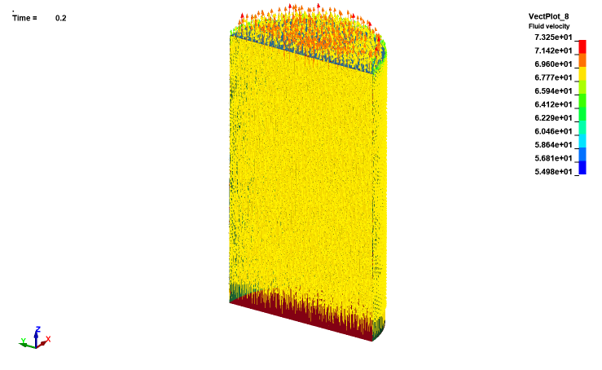
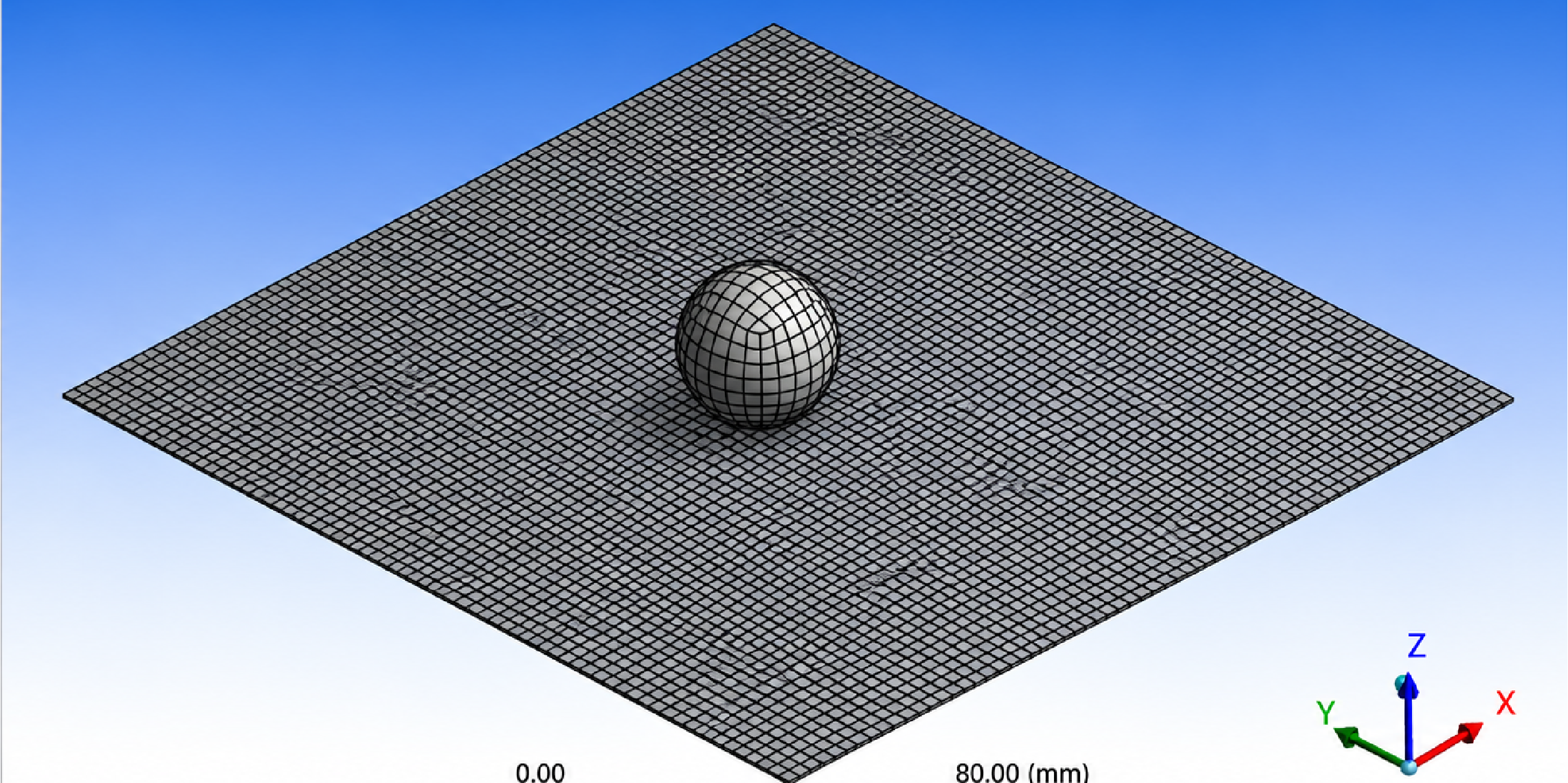
Eulerian Fluid Modeling: Simulating airflow over a fixed spatial mesh to analyze aerodynamic performance.
Figure 8 Velocity Vector Plot
Section 06Porosity Modeling of Fabric Material
Parachute canopies are highly porous, affecting inflation dynamics and drag forces. LS-DYNA’s ICFD_MODEL_POROUS simulates:
Pressure Drop Across Fabric: Validating airflow resistance through the canopy.
Porous Flow Interaction: Ensuring accurate drag force predictions during inflation.
Section 07Fluid-Structure Interaction (FSI) in LS-DYNA
FSI simulation is essential for capturing the coupled behavior of fluid and structure during parachute deployment. LS-DYNA offers:
Two-Way Coupling: Simultaneously solving structural and aerodynamic forces for realistic inflation modeling.
Eulerian-Lagrangian Interaction: Enabling airflow-structure coupling without inter-code data transfers.
Explicit Time Integration: Handling complex deformations and contact nonlinearities efficiently.
FSI analysis provides realistic predictions of inflation forces, canopy deformation, and wake effects, ensuring accurate modeling for both airdrop and planetary reentry applications.
Section 08Analysis of Floats with FSI
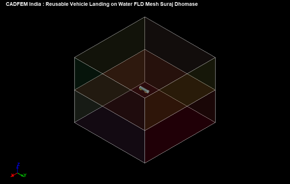
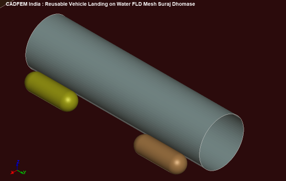
Figure 13 Float Impact on Water
Apart from parachutes, LS-DYNA is also widely used in aerospace floatation system analysis, simulating:
Buoyancy & Water Impact Forces: Evaluating how aerospace floats behave under hydrodynamic loads.
Structural Deformations: Ensuring float durability under impact conditions.
This capability proves valuable for spacecraft recovery systems and maritime aerospace applications.
Conclusion: Advancing Parachute Design with LS-DYNA
The simulation of parachute deployment using LS-DYNA is a groundbreaking advancement in aerospace engineering. This study highlights:
FSI Coupling for Accurate Inflation Predictions.
Material and Structural Modeling for Enhanced Durability.
CFD-Driven Aerodynamic Insights for Performance Optimization.
As parachute designs evolve with new canopy structures and porosity variations, LS-DYNA remains an essential tool for achieving first-time-right engineering solutions in aerospace and defense industries.
Found this useful? Share it
Continue Reading
More from our engineers.
If this article was useful, these picks up where it leaves off — practical reads from the CADFEM engineering practice.