What Is a Battery Management System? Guide for Automotive Applications
Read the CADFEM guide to smart BMS functions, automotive thermal management, centralized vs. modular architectures, and Ansys simulation
Read Article →
Parachutes are crucial aerodynamic decelerators in airdrop and planetary reentry missions, where their inflation dynamics involve significant fluid-structure interaction (FSI) phenomena.
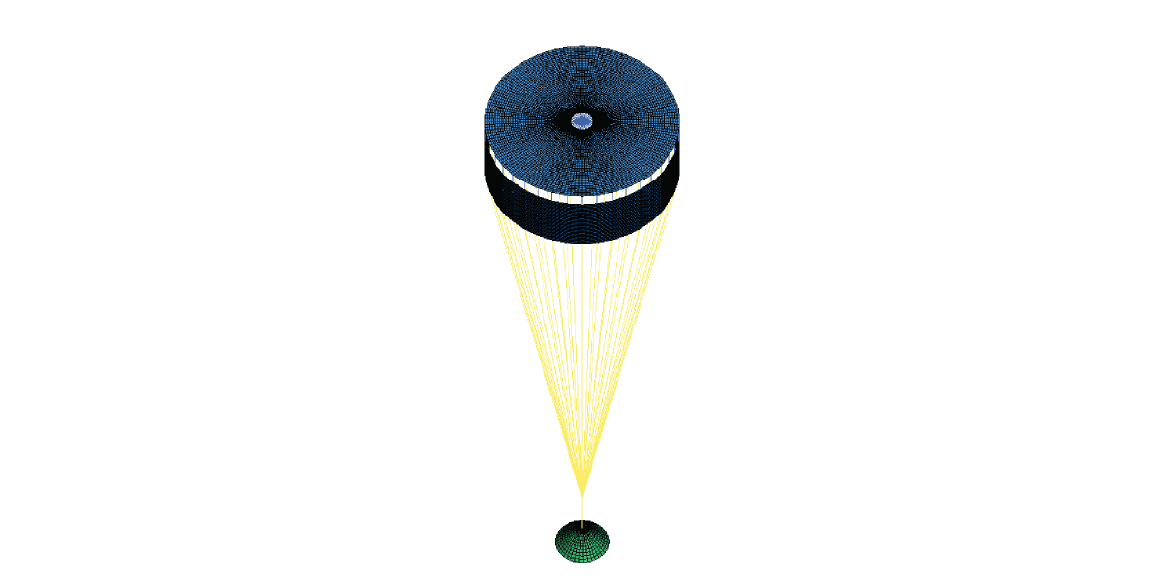
Parachutes are crucial aerodynamic decelerators in airdrop and planetary reentry missions, where their inflation dynamics involve significant fluid-structure interaction (FSI) phenomena. Given their low mass and high flexibility, parachutes experience complex interactions between the canopy structure and surrounding airflow. These interactions significantly influence structural deformation and performance under aerodynamic loads.
Traditional parachute deployment simulations rely on sequential processes—first simulating structural deformation using a solid mechanics solver and then analyzing aerodynamics separately with Computational Fluid Dynamics (CFD). However, this method often leads to inaccurate predictions. To overcome this, LS-DYNA’s robust FSI capabilities enable a more precise simulation of parachute deployment, offering crucial insights for aerospace and defense organizations.
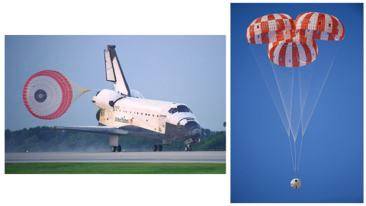
Drogue parachutes are deployed at high velocities ranging from 102 m/s at sea level to Mach 1.5 at 15,240 meters altitude. These parachutes are designed for:
LS-DYNA aids in structural integrity analysis, stress distribution, and inflation performance validation, making it indispensable in drogue parachute design.
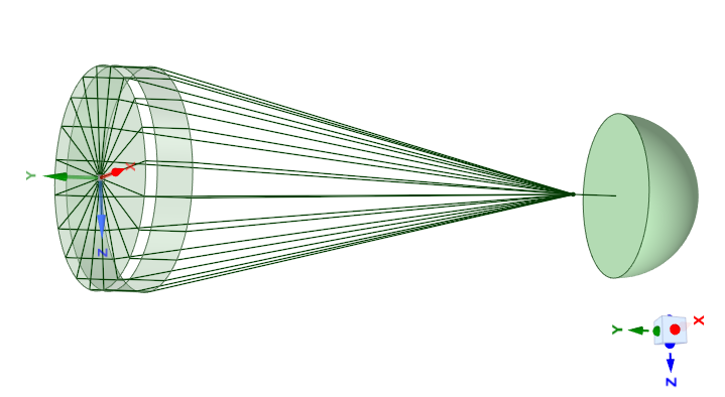
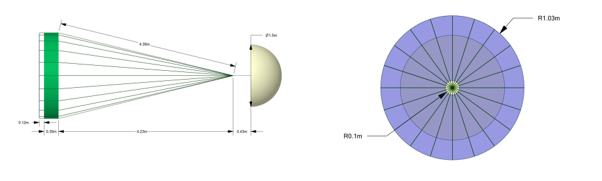
Structural analysis is a key factor in parachute design and performance evaluation, as it determines how well the canopy and suspension lines withstand aerodynamic loads. LS-DYNA employs:
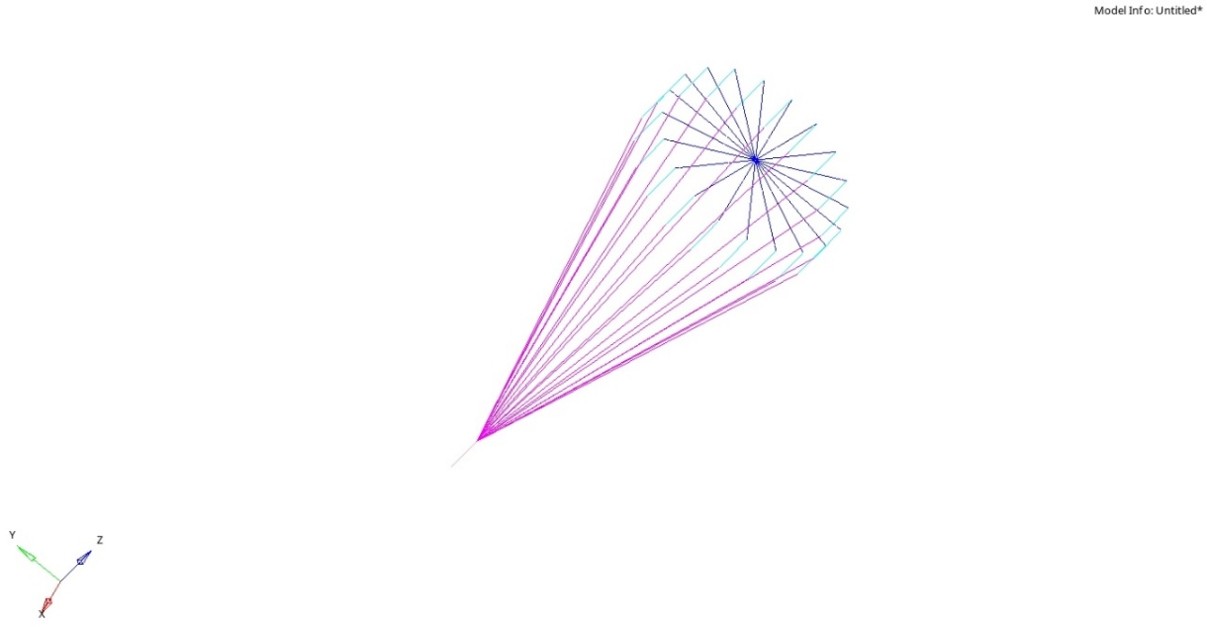
Fabric materials in parachutes exhibit large deformations and nonlinear responses. LS-DYNA utilizes:
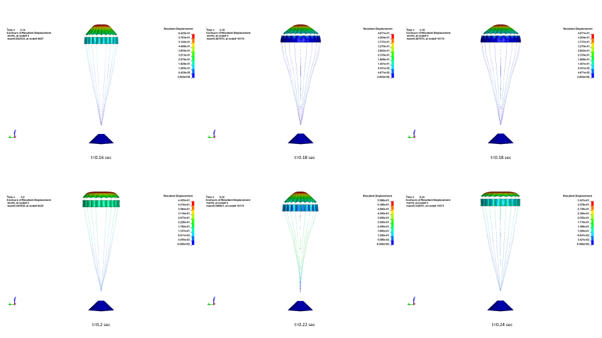
Dynamic simulations in LS-DYNA evaluate parachute behavior under real-world conditions:
These findings demonstrate LS-DYNA’s capability to predict stress distribution and deformation, ensuring safe and efficient parachute deployment.
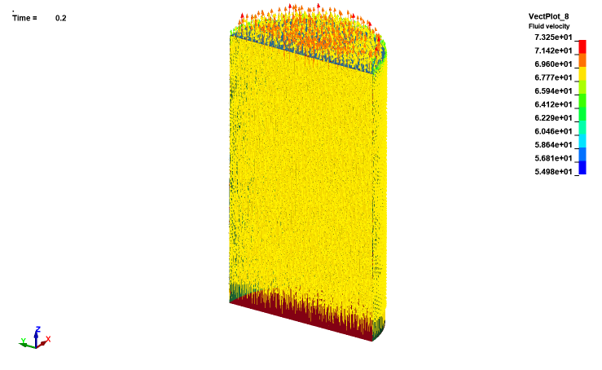
CFD simulations using LS-DYNA provide valuable insights into parachute aerodynamics, addressing:
Parachute canopies are highly porous, affecting inflation dynamics and drag forces. LS-DYNA’s ICFD_MODEL_POROUS simulates:
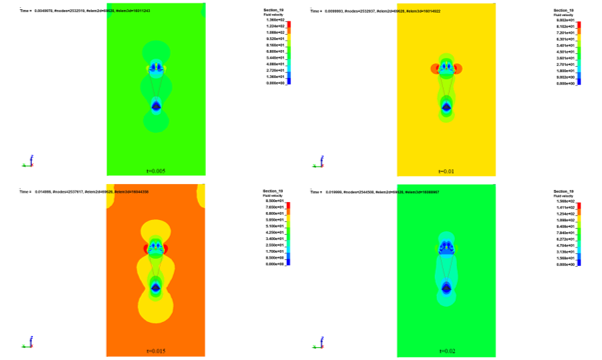
FSI simulation is essential for capturing the coupled behavior of fluid and structure during parachute deployment. LS-DYNA offers:
FSI analysis provides realistic predictions of inflation forces, canopy deformation, and wake effects, ensuring accurate modeling for both airdrop and planetary reentry applications.
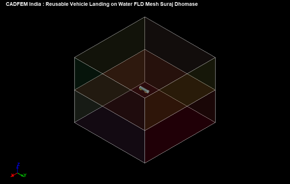
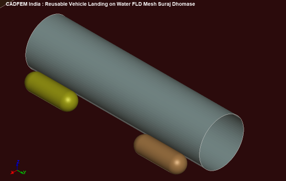
Apart from parachutes, LS-DYNA is also widely used in aerospace floatation system analysis, simulating:
This capability proves valuable for spacecraft recovery systems and maritime aerospace applications.
The simulation of parachute deployment using LS-DYNA is a groundbreaking advancement in aerospace engineering. This study highlights:
As parachute designs evolve with new canopy structures and porosity variations, LS-DYNA remains an essential tool for achieving first-time-right engineering solutions in aerospace and defense industries.
 Multi Physics
Read the CADFEM guide to smart BMS functions, automotive thermal management, centralized vs. modular architectures, and Ansys simulation
Read Article → Structures
Di tengah pesatnya perkembangan teknologi rekayasa, adopsi CAE di Indonesia menjadi kunci utama dalam meningkatkan efisiensi dan produktivitas berbagai sektor industri.
Read Article → Electronics
Learn how to use Ansys HFSS SBR+ for 77 GHz automotive radar simulation, evaluating radome effects, antenna performance, radiation patterns, and installation.
Read Article →Connect with CADFEM experts for advanced simulation, automation, and engineering solutions tailored to your industry.