What Is a Battery Management System? Guide for Automotive Applications
Read the CADFEM guide to smart BMS functions, automotive thermal management, centralized vs. modular architectures, and Ansys simulation
Read Article →
Optical waveguides are essential components in photonic integrated circuits (PICs), enabling the precise control and transmission of light for applications in telecommunications, biosensing, quantum computing, and optical computing.
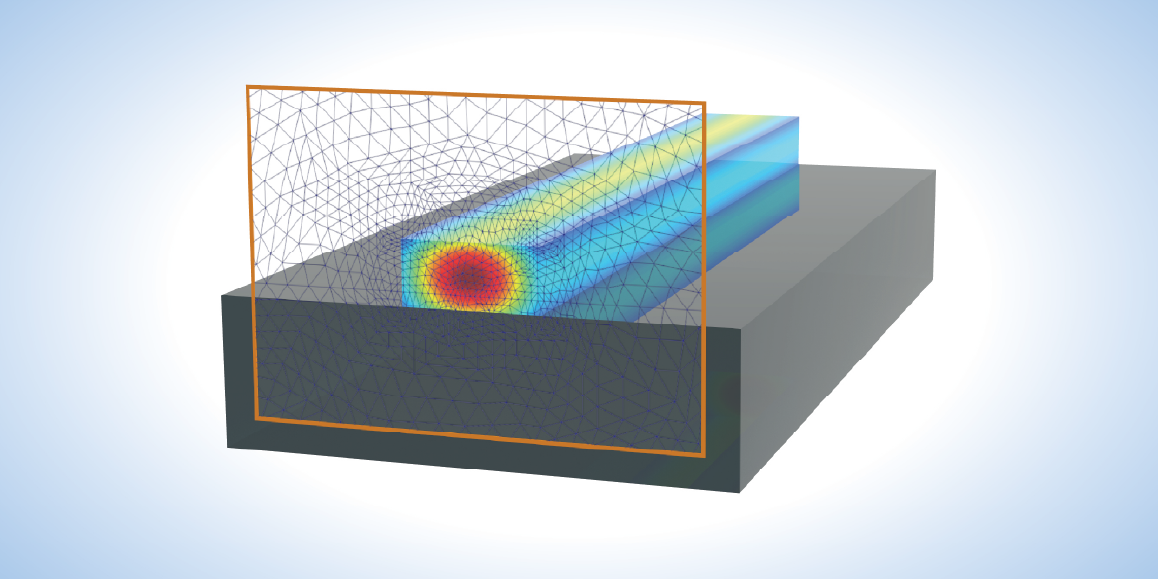
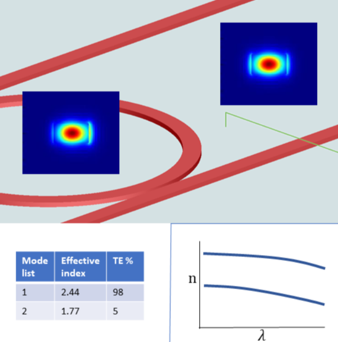
Optical waveguides are essential components in photonic integrated circuits (PICs), enabling the precise control and transmission of light for applications in telecommunications, biosensing, quantum computing, and optical computing. Understanding their behavior through simulation is crucial for optimizing their performance. One of the most powerful tools for waveguide design and analysis is Ansys Lumerical, a comprehensive photonic simulation software suite that provides accurate modeling and optimization capabilities.
This blog explores the theoretical background of optical waveguides and demonstrates how to simulate them using Ansys Lumerical MODE and Finite-Difference Time-Domain (FDTD) solvers. Whether you're a researcher, engineer, or student, this guide will help you harness the power of Ansys Lumerical for precise waveguide analysis.
An optical waveguide is a structure designed to confine and direct electromagnetic waves in the optical spectrum. It typically consists of a high-refractive-index core surrounded by a lower-refractive-index cladding, ensuring total internal reflection (TIR) and confinement of light.
Waveguide performance is influenced by material choice, geometry, and operating wavelength, making simulation essential for precise design and optimization before fabrication.
Ansys Lumerical provides industry-leading solvers for waveguide analysis, including:
The MODE solver in Ansys Lumerical is used for eigenmode analysis, helping engineers and researchers compute the effective index, mode profiles, and propagation characteristics of waveguides.
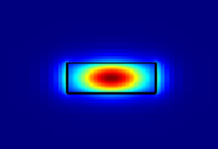
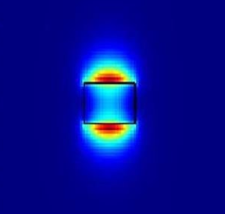
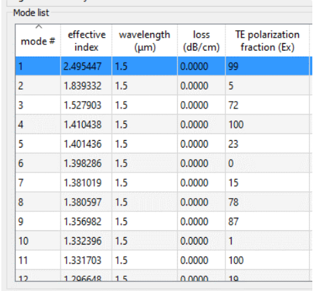
The Finite-Difference Time-Domain (FDTD) solver in Ansys Lumerical is ideal for full-wave electromagnetic simulations, capturing reflections, losses, and coupling effects in waveguides.
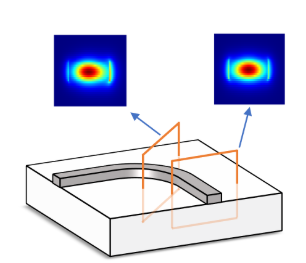
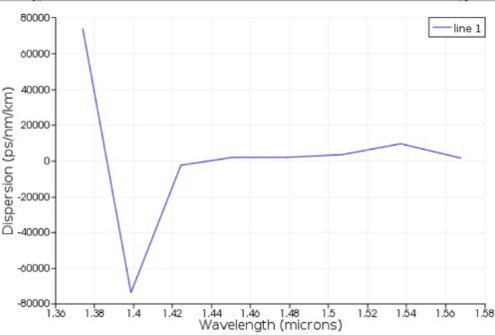
By combining MODE solver for eigenmode analysis and FDTD solver for full-wave simulations, engineers can achieve a detailed understanding of waveguide behavior, ensuring optimal design before fabrication.
Simulating optical waveguides in Ansys Lumerical enables precise design, optimization, and validation before fabrication, significantly reducing costs and improving performance. By leveraging the MODE solver for eigenmode analysis and the FDTD solver for full-wave electromagnetic simulations, engineers and researchers can design highly efficient waveguides for photonics, integrated optics, and telecommunications.
Interested in learning more? Join our webinar: "Unlocking the Power of Photonics with Lumerical: A Beginner's Guide." Register now to gain hands-on insights into waveguide simulation and photonic design!
 Multi Physics
Read the CADFEM guide to smart BMS functions, automotive thermal management, centralized vs. modular architectures, and Ansys simulation
Read Article → Structures
Di tengah pesatnya perkembangan teknologi rekayasa, adopsi CAE di Indonesia menjadi kunci utama dalam meningkatkan efisiensi dan produktivitas berbagai sektor industri.
Read Article → Electronics
Learn how to use Ansys HFSS SBR+ for 77 GHz automotive radar simulation, evaluating radome effects, antenna performance, radiation patterns, and installation.
Read Article →Connect with CADFEM experts for advanced simulation, automation, and engineering solutions tailored to your industry.