Understanding Terrain-Based Mission Analysis and Terrain Fidelity with Ansys STK
When engineers think about mission analysis, attention naturally goes to the vehicle, trajectory, sensor, communications system, or target.
Read Article →
How STK and Perceive EM combine trajectory design with SBR electromagnetic simulation to generate Range-Doppler maps under realistic dynamic conditions.
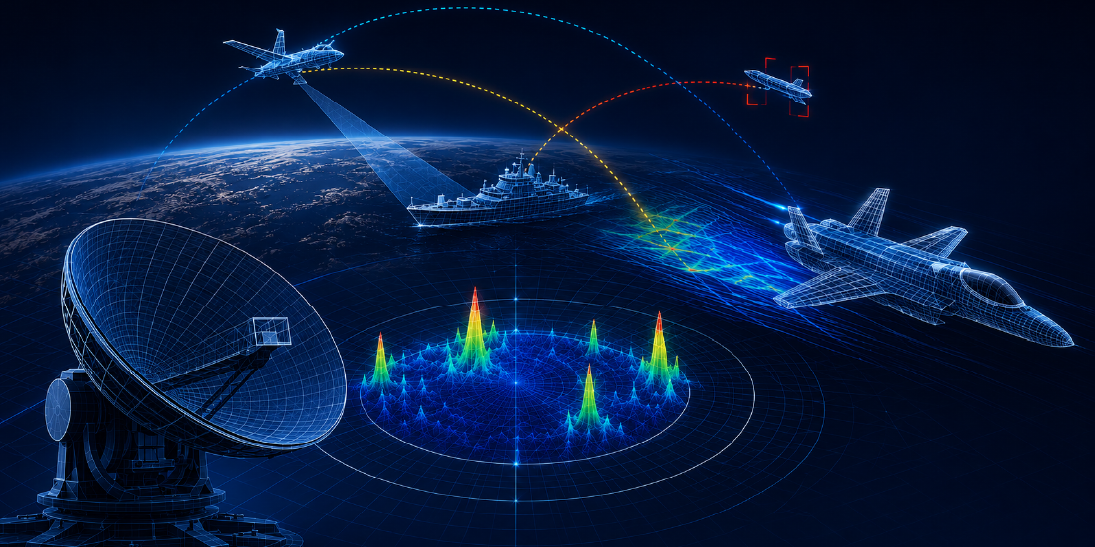
Modern radar simulation requires accurate flight path design, realistic scenario modeling, and detailed electromagnetic representation of radar systems. Systems Tool Kit (STK) provides a comprehensive environment for designing and analyzing platform and target trajectories within dynamic scenarios, while Perceive EM enables detailed radar modeling and electromagnetic sensing analysis.
Integrating these capabilities establishes a seamless simulation workflow in which flight path profile from STK is incorporated into Perceive EM for realistic radar scenario evaluation. This integrated approach enables Range-Doppler (RD) map generation, target detection analysis, motion characterization, and assessment of radar performance under dynamic operational conditions.


Range-Doppler (RD) maps play a key role in radar simulation by transforming simulated radar returns into an intuitive representation of target range and relative velocity. Instead of analyzing raw received signals directly, the RD map provides a clear view of where targets appear in the radar scene and how their motion influences the received signal.
STK considers the time-varying attitude of the platform to accurately represent its orientation and radar pointing direction, enabling realistic determination of radar–target geometry and supporting subsequent electromagnetic analysis in Perceive EM.
The RD map helps to:
Systems Tool Kit (STK) establishes the kinematic and geometric foundation of the radar simulation by modeling aircraft and target motion within a dynamic 3D environment. It provides time-dependent position, velocity, attitude, and radar–target geometry, including range, azimuth, elevation, and relative velocity. This synchronized scenario data is transferred to Perceive EM, where it is used for electromagnetic radar modeling and target-response analysis, ultimately supporting Range-Doppler (RD) map generation, target detection, and radar performance evaluation under realistic dynamic conditions.
Key capabilities:

Perceive EM provides the electromagnetic simulation layer for RD map generation after the scenario and trajectories are defined in STK. Using Shooting and Bouncing Rays (SBR) technology, it models radar-wave propagation, target scattering, and electromagnetic interactions. Radar parameters and dynamic target geometry are incorporated to generate realistic radar returns. The resulting coherent response data is then processed in the range and Doppler domains, producing the RD map for target detection, range estimation, velocity analysis, and radar performance evaluation.
Key capabilities:

The STK–Perceive EM integration connects two essential views of a radar scenario: how the objects move and how the radar responds to that motion. STK acts as the kinematic engine, providing time-varying platform and target position, altitude, velocity, attitude, and radar–target geometry. As the target moves, parameters such as range, aspect angle, line-of-sight, and relative velocity continuously change.
This information is transferred through an API-based interface to Perceive EM, where the radar and target are represented using their electromagnetic characteristics, including frequency, bandwidth, waveform, antenna pattern, polarization, transmit power, receiver parameters, geometry, and material properties. Perceive EM then applies the Shooting and Bouncing Ray (SBR) method to model propagation, reflection, diffraction, multipath, and target scattering. The resulting time-varying radar echoes capture the electromagnetic response of the moving target and provide the basis for Range-Doppler map generation, target detection, and radar performance analysis.

The integration of STK and Perceive EM is valuable wherever dynamic target motion and electromagnetic radar behavior need to be analyzed together. By connecting trajectory data with SBR-based radar simulation, engineers can move from mission-level scenarios to realistic radar observables.
The STK–Perceive EM integration provides an end-to-end workflow that combines dynamic kinematic modeling with high-fidelity electromagnetic radar simulation. STK defines the time-varying platform and target states, attitude, and radar–target geometry, while Perceive EM uses SBR-based modeling to simulate propagation, scattering, and realistic radar returns. These responses are processed into Range-Doppler maps, enabling analysis of target range, radial velocity, detection, and scattering characteristics.
By connecting scenario modeling → kinematics → EM interaction → radar response → RD map, the workflow improves simulation realism and bridges the gap between system-level and electromagnetic analysis. This foundation can support AI/ML-based sensing, synthetic data generation, autonomous detection, digital twins, advanced radar imaging, and real-time simulation, contributing to the development and validation of next-generation intelligent radar systems.
 DME
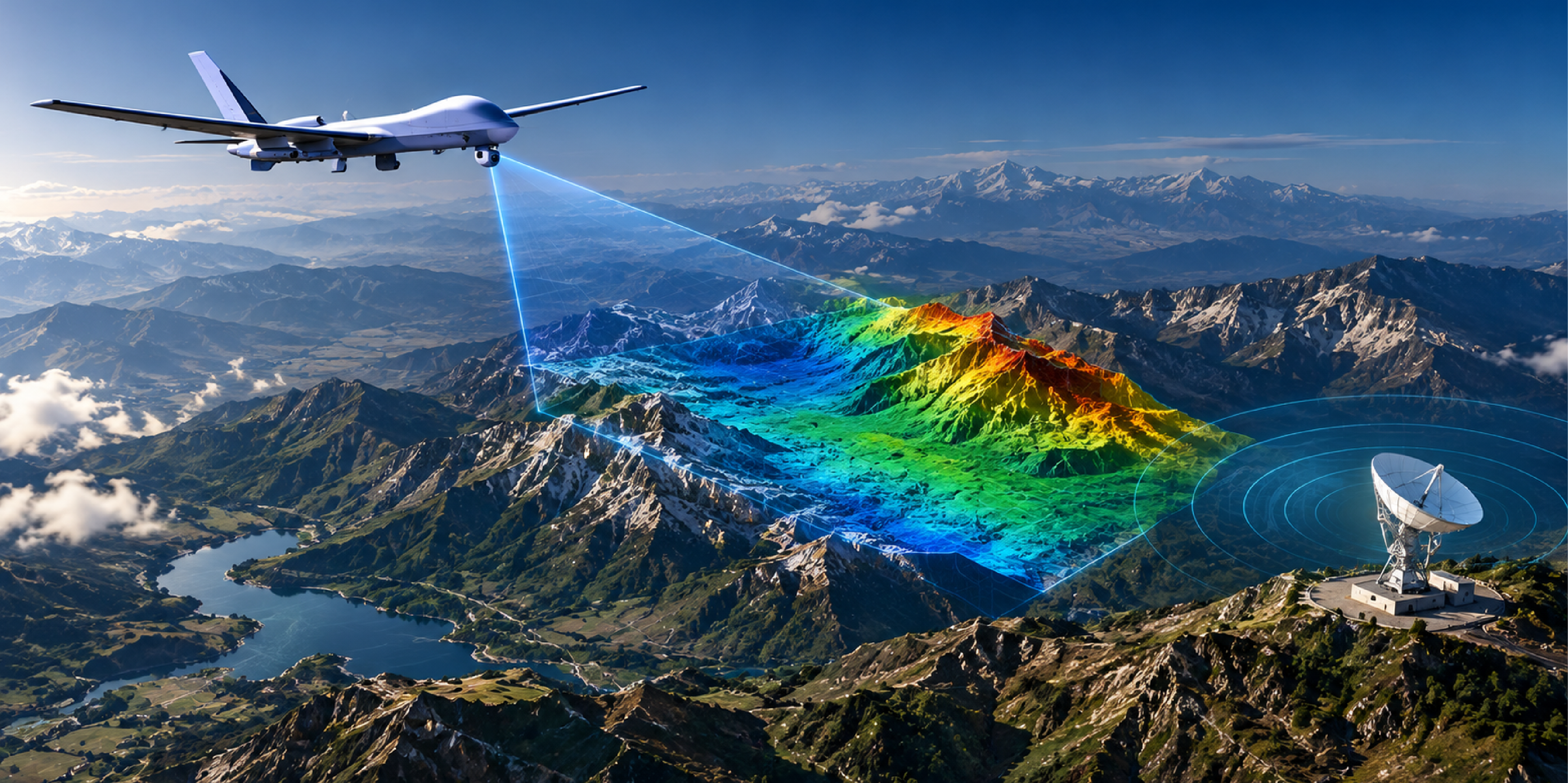
When engineers think about mission analysis, attention naturally goes to the vehicle, trajectory, sensor, communications system, or target.
Read Article →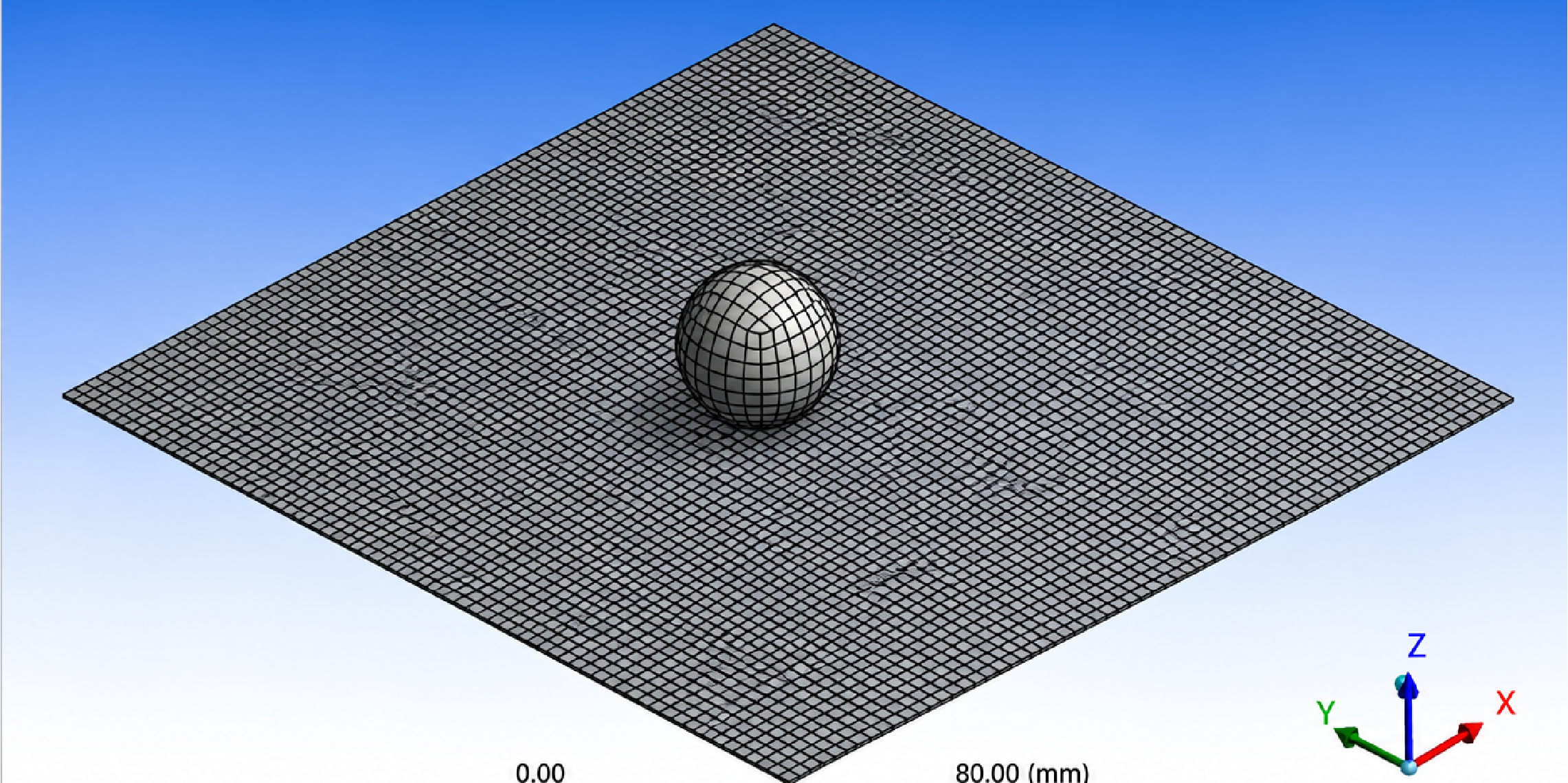 Structures
Laminated composite materials such as fiber reinforced polymers (FRPs) offer exceptional strength-to-weight ratios, making them essential in aerospace, defense, and automotive engineering.
Read Article →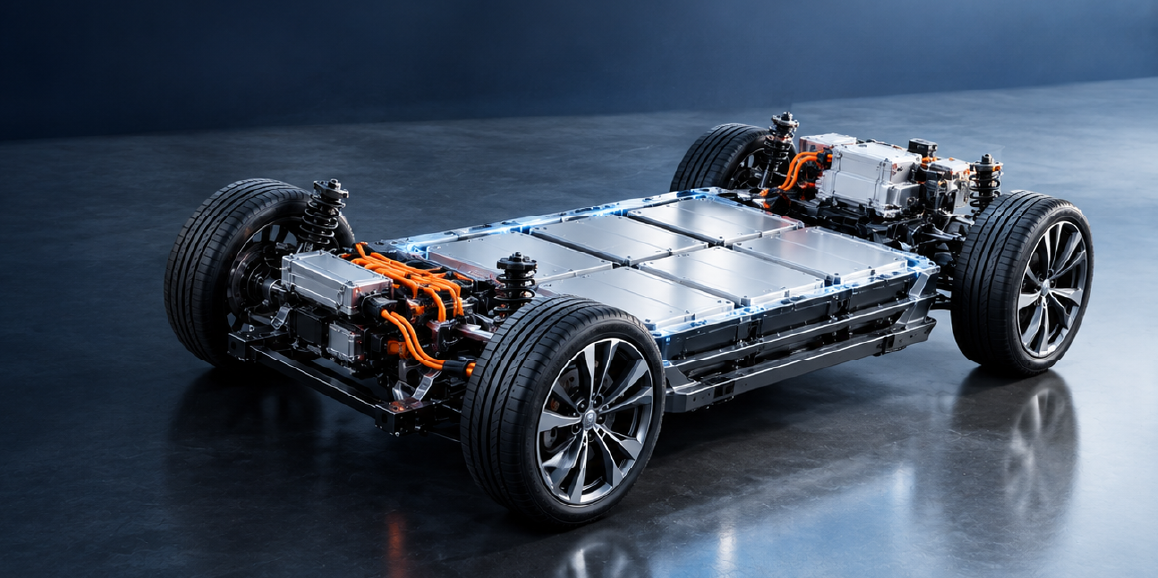 Multi Physics
Read the CADFEM guide to smart BMS functions, automotive thermal management, centralized vs. modular architectures, and Ansys simulation
Read Article →Connect with CADFEM experts for advanced simulation, automation, and engineering solutions tailored to your industry.