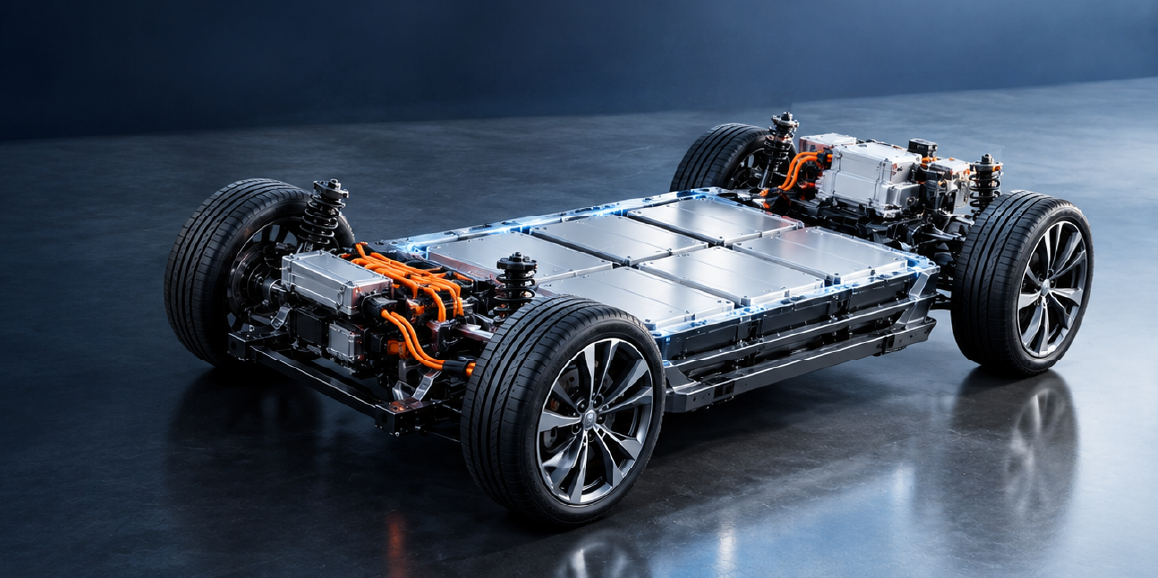
What Is a Battery Management System? Guide for Automotive Applications
Read the CADFEM guide to smart BMS functions, automotive thermal management, centralized vs. modular architectures, and Ansys simulation
Read Article →
In the competitive mining industry, optimizing equipment performance isn’t just about increasing throughput—it’s about reliability, safety, and cost-effective design. One advanced approach that’s reshaping equipment development is the coupling of the Discrete Element Method (DEM) and Finite Element Method (FEM).
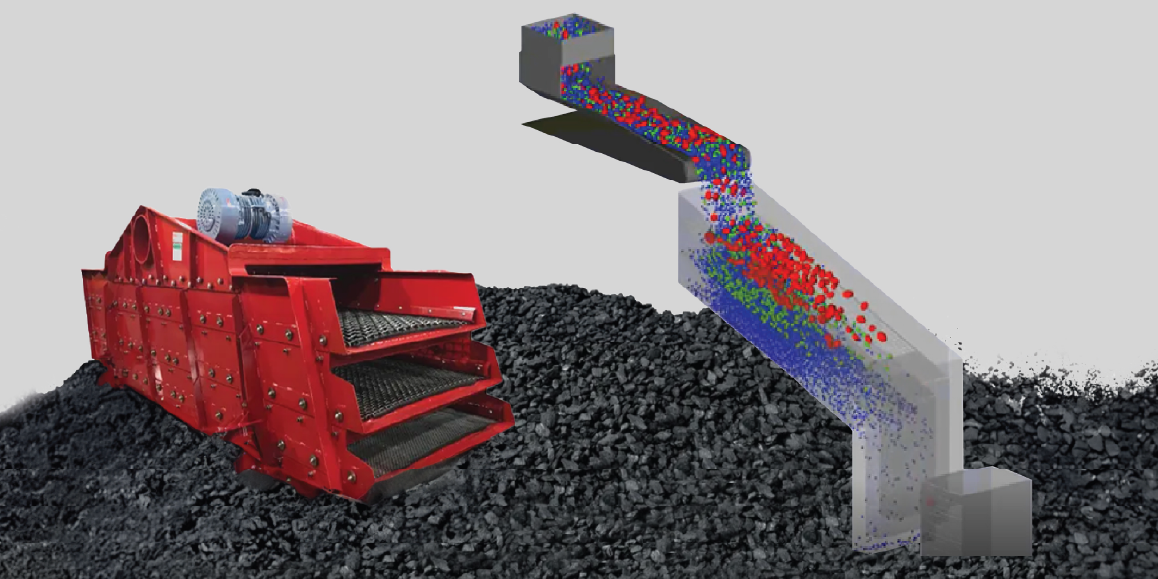
In the competitive mining industry, optimizing equipment performance isn’t just about increasing throughput—it’s about reliability, safety, and cost-effective design. One advanced approach that’s reshaping equipment development is the coupling of the Discrete Element Method (DEM) and Finite Element Method (FEM). In this blog post, we explore how DEM-FEM coupling—using Ansys Rocky for DEM and Ansys Mechanical for FEM—enhances the design and performance of vibrating screens, a critical piece of mineral processing equipment.
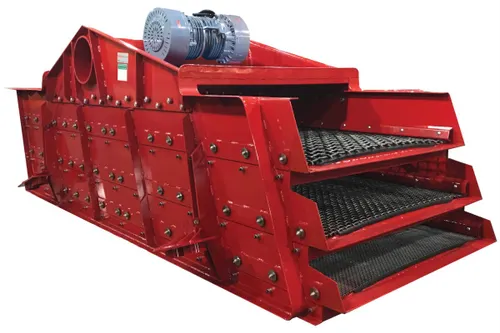
Vibrating screens are essential in the mining process. They efficiently separate and classify particles based on size, ensuring that ore processing systems work at their optimum capacity. However, the dynamic environment on the screen—characterized by continuous vibration and particle impacts—creates challenges in both separation efficiency and structural integrity. This is where advanced simulation comes into play.
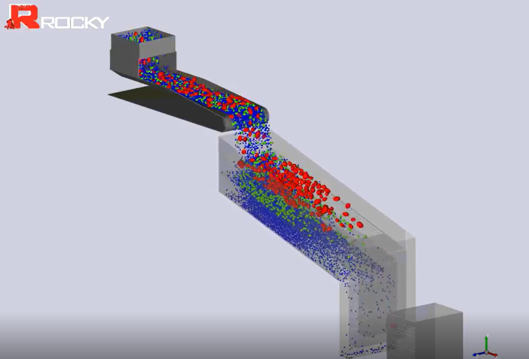
DEM is a powerful numerical tool that models individual particle interactions. Ansys Rocky, the industry-leading DEM simulation tool, accurately predicts the behaviour of granular materials. It allows engineers to:
For example, by simulating ore particles moving over a vibrating screen, Ansys Rocky can help identify regions of high particle concentration and impact, providing key insights into the efficiency of separation and potential stress concentrations on the screen surface.
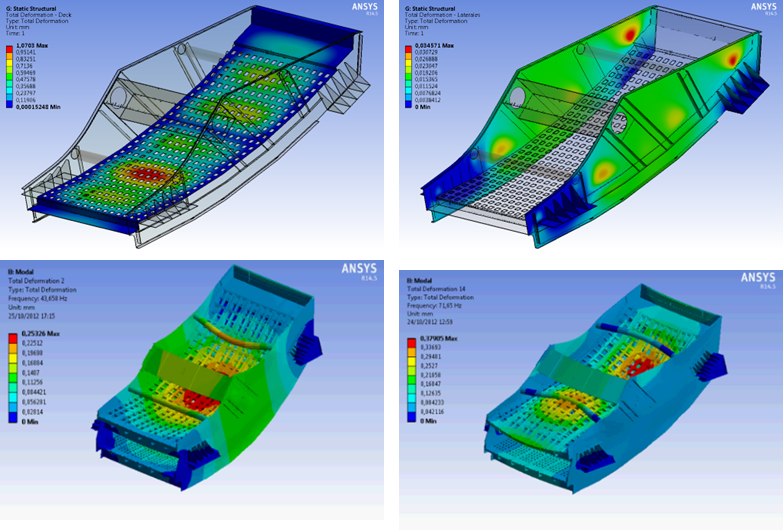
FEM, on the other hand, focuses on the structural response of the vibrating screen. Ansys Mechanical is a robust tool for predicting:
By using FEM, engineers can ensure that the screen’s design withstands the forces induced by particle impacts, ultimately leading to longer equipment life and improved safety.
The real magic happens when DEM and FEM are coupled. This integrated simulation approach allows for a complete understanding of both the particle behavior and the structural response. Key benefits include:
For instance, a case study in the mining industry showed how using coupled DEM-FEM simulations led to a more efficient vibrating screen design, with improved separation efficiency and a significant reduction in unexpected downtime due to structural failures.
Ansys Rocky and Ansys Mechanical offer a seamless workflow for coupling DEM and FEM:
In a rapidly evolving mining industry, leveraging coupled DEM-FEM simulations is no longer optional—it’s essential. By using Ansys Rocky and Ansys Mechanical, companies can design vibrating screens that not only improve separation efficiency but also ensure structural durability and operational safety. This integration empowers engineers to innovate confidently, reducing both development costs and downtime.
Ready to revolutionize your equipment design with advanced simulation? Contact us today to learn how Ansys simulation tools can drive efficiency and reliability in your mining operations.
 Multi Physics
Read the CADFEM guide to smart BMS functions, automotive thermal management, centralized vs. modular architectures, and Ansys simulation
Read Article →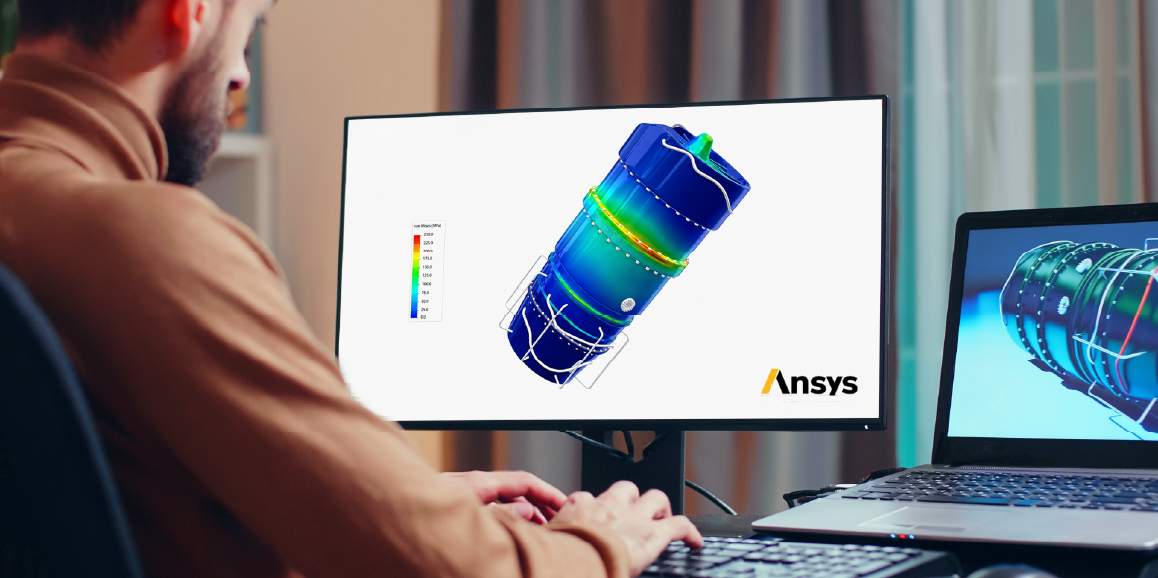 Structures
Di tengah pesatnya perkembangan teknologi rekayasa, adopsi CAE di Indonesia menjadi kunci utama dalam meningkatkan efisiensi dan produktivitas berbagai sektor industri.
Read Article → Electronics
Learn how to use Ansys HFSS SBR+ for 77 GHz automotive radar simulation, evaluating radome effects, antenna performance, radiation patterns, and installation.
Read Article →Connect with CADFEM experts for advanced simulation, automation, and engineering solutions tailored to your industry.