Understanding Terrain-Based Mission Analysis and Terrain Fidelity with Ansys STK
When engineers think about mission analysis, attention naturally goes to the vehicle, trajectory, sensor, communications system, or target.
Read Article →
Understand why contact nonlinear analysis is essential for accurate structural predictions — and how Ansys Mechanical captures separation, sliding, and re-contact in real assemblies.

Why do many structural failures occur even when stress levels appear acceptable in simulation?
The answer often lies at the interfaces between components. Bolted joints can lose preload, gears continuously change contact locations, seals may separate under pressure, and assembled parts can slide, stick, or re-contact during operation. These interface interactions significantly influence stress distribution, load transfer, deformation, vibration response, and overall structural durability.
Traditional linear analysis assumes permanently connected interfaces and constant stiffness throughout loading. While suitable for many preliminary studies, this assumption often fails to represent how real assemblies behave in service.
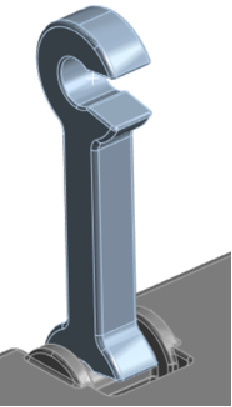
Contact nonlinear analysis addresses this challenge by accurately modelling separation, sliding, friction, sticking, and re-contact between interacting surfaces. By capturing realistic interface behaviour, engineers can predict failure mechanisms earlier, improve design confidence, and reduce dependence on costly physical testing.
Contact nonlinearity occurs whenever the interaction between two surfaces changes during loading. Common behaviours include:
These changing contact conditions continuously alter the stiffness and load path of a structure.
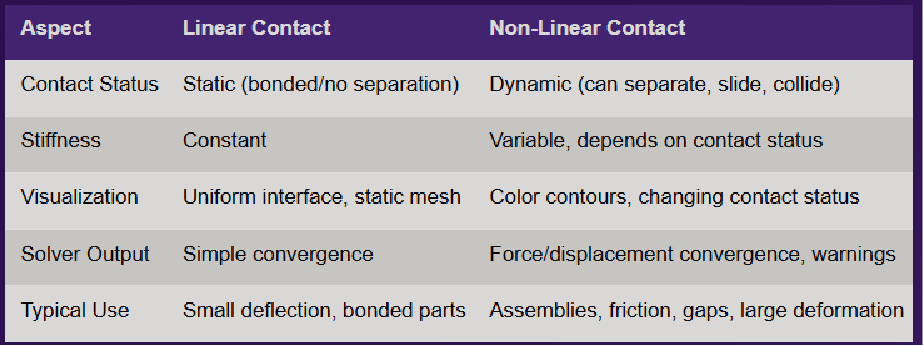
Consider a bolted flange exposed to thermal cycling. A linear analysis may predict a stable connection, while the actual assembly experiences preload loss, local separation, and stress redistribution. Similarly, gear systems constantly undergo changing contact regions that influence load transfer and wear characteristics.
Ignoring such effects can lead to:
As products become lighter, more optimized, and increasingly performance-driven, accurately representing interface behaviour has become essential for reliable engineering design. Realistic contact modelling often reveals stress redistribution that linear analysis cannot capture.
If your design contains any of the following, contact nonlinearity should be strongly considered:
In these applications, interface behaviour often governs structural performance and reliability more than the material itself.
Ansys Mechanical provides several contact formulations to represent different physical interactions between components.
| Contact Type | Description | Typical Applications |
|---|---|---|
| Bonded | No sliding or separation; surfaces behave as glued | Welded joints, adhesives, rigid assemblies |
| Frictional | Separation and sliding with friction | Bolted joints, brake systems |
| Frictionless | Separation and frictionless sliding allowed | Bearings, assembly interfaces |
| No Separation | Sliding allowed, separation prevented | Sliding plates, wiper systems |
| Rough | Separation allowed, no sliding | Press fits, constrained joints |
| Bonded Initial | Maintains initial contact state | Preassembled structures |
| No Separation – Penetration Only | Initial penetration allowed, no separation | Preloaded interfaces |
Selecting the appropriate contact type is critical for achieving realistic simulation results and ensuring physical behaviour is accurately represented.
Successful nonlinear contact analysis begins with a clean and well-prepared geometry. Recommended preparation steps include:
Good geometry preparation significantly improves solution stability and convergence.
After geometry preparation, contact and target surfaces are defined to represent physical interfaces within the assembly. Engineers typically:
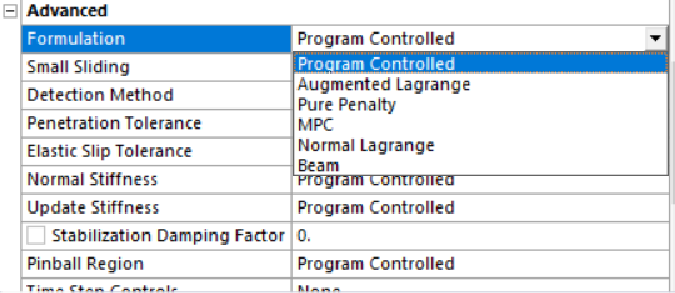
Common contact algorithms include:
Among these, the Augmented Lagrange formulation is widely used because it provides a strong balance between accuracy and numerical stability.
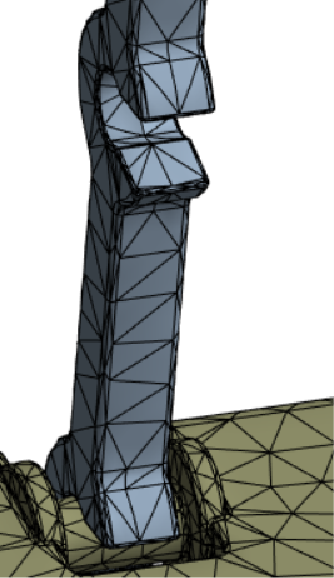
Mesh quality plays a major role in contact accuracy. Best practices include:
Poor mesh quality may result in:
A well-refined contact mesh often delivers more reliable results without significantly increasing computational cost.
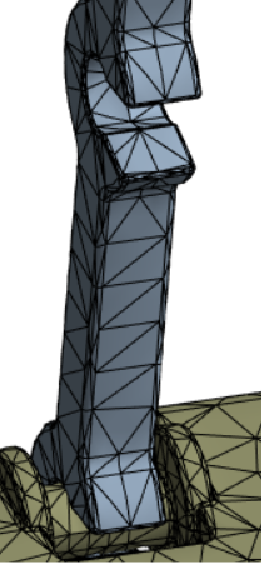
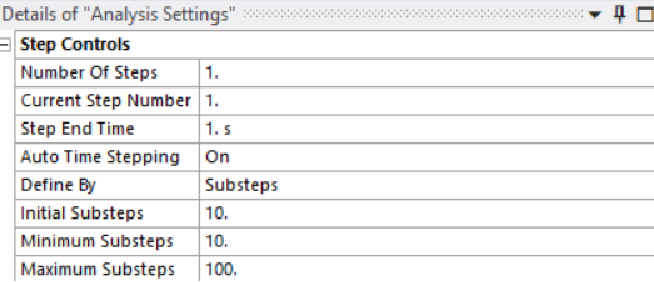
Since contact conditions continuously evolve throughout loading, appropriate nonlinear solver settings are essential. Recommended practices include:
After solving, engineers typically evaluate:
These outputs provide valuable insight into interface behaviour and help identify potential failure locations.
Contact nonlinear analysis is widely used in industries where interface behaviour directly affects performance and reliability. Typical applications include:
By accurately representing surface interactions, engineers can reduce physical prototyping, improve product reliability, and identify failure-prone regions much earlier in the development process.
Many structural failures originate not from material limitations, but from the way components interact with one another.
Contact nonlinearity enables engineers to capture realistic behaviours such as separation, sliding, friction, sticking, and load redistribution—phenomena that are often responsible for critical failure mechanisms. By moving beyond idealized assumptions, engineers gain a deeper understanding of how assemblies behave under real operating conditions.
Modern simulation tools such as Ansys Mechanical provide robust capabilities for solving complex contact problems with high accuracy and efficiency. As products continue to become lighter, smarter, and more optimized, contact nonlinear analysis will remain a critical tool for predicting performance, reducing development costs, and improving design reliability before the first prototype is ever built.
 DME
When engineers think about mission analysis, attention naturally goes to the vehicle, trajectory, sensor, communications system, or target.
Read Article → Structures
Laminated composite materials such as fiber reinforced polymers (FRPs) offer exceptional strength-to-weight ratios, making them essential in aerospace, defense, and automotive engineering.
Read Article →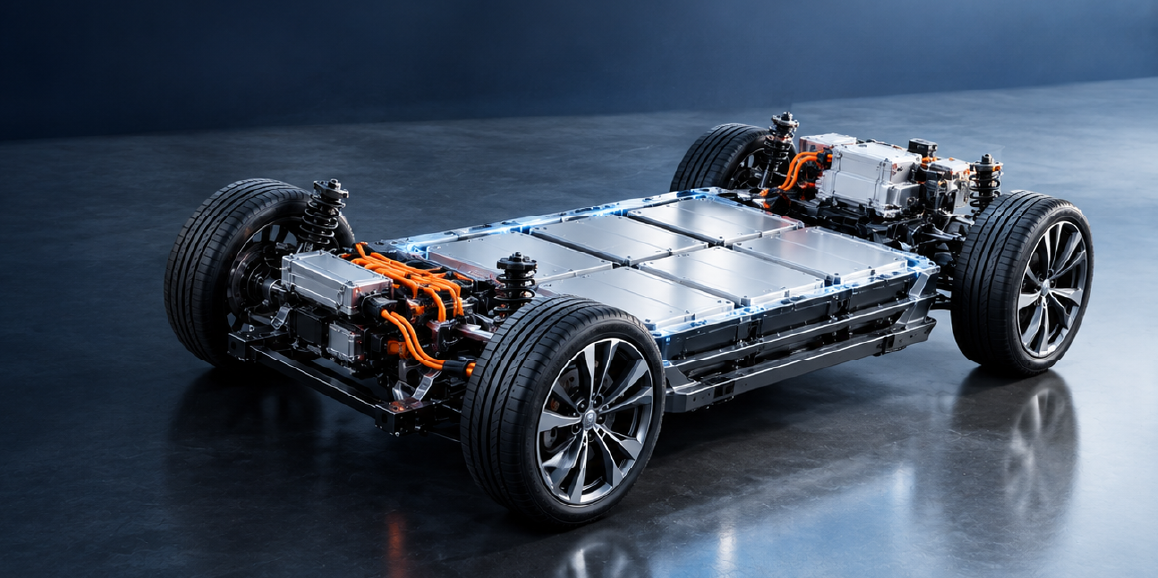 Multi Physics
Read the CADFEM guide to smart BMS functions, automotive thermal management, centralized vs. modular architectures, and Ansys simulation
Read Article →Connect with CADFEM experts for advanced simulation, automation, and engineering solutions tailored to your industry.